
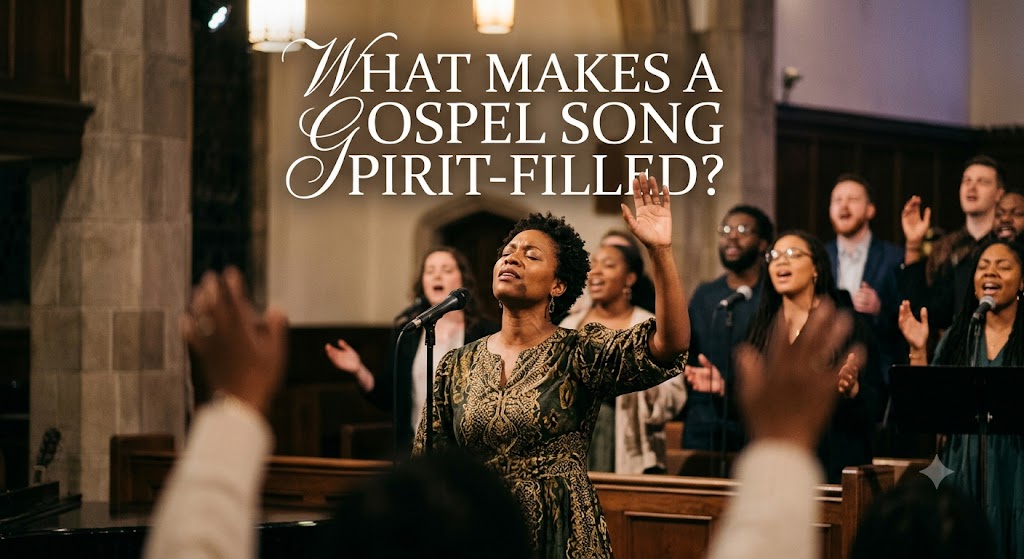
What Makes a Gospel Song Spirit-Filled?
A gospel song can have a beautiful melody, exceptional vocal performance, flawless production and even become a global hit, yet still leave people wondering why another simple song with fewer instruments and less technical excellence seems to carry a deeper spiritual impact. Throughout history, believers have often described certain songs as being “Spirit-filled.” These songs do more than entertain an audience or showcase musical talent. They touch hearts, inspire repentance, strengthen faith, bring comfort during difficult seasons and draw listeners closer to God. This raises an important question that every Christian, worship leader, songwriter and music lover should consider: What Makes a Gospel Song Spirit-Filled?
Understanding What Makes a Gospel Song Spirit-Filled? is more important today than ever before. Christian music has become one of the fastest-growing genres across the world. Millions of songs are released every year, covering different styles such as worship, praise, gospel hip hop, contemporary Christian music, Afro gospel, Southern gospel, gospel reggae, choir music and many others. While diversity in musical style is beautiful, not every song labelled as gospel necessarily carries the same spiritual depth. Some songs become popular because of clever marketing, catchy melodies or viral social media trends, while others quietly transform lives without ever topping music charts.
The phrase Spirit-filled should never be misunderstood to mean emotional manipulation. Many people mistake emotional experiences for spiritual encounters. A song can make someone cry because of its melody or because it reminds them of a personal memory. Another song may create excitement because of energetic rhythms and outstanding stage performance. Although emotions are a natural part of worship, they are not the ultimate evidence that the Holy Spirit is at work. A truly Spirit-filled gospel song goes beyond temporary feelings. It leaves behind lasting spiritual fruit.
One of the greatest characteristics of a Spirit-filled gospel song is that it points listeners toward Jesus Christ rather than toward the artist. The purpose of Christian music has never been to make celebrities out of musicians. Throughout Scripture, worship consistently directs honour, praise and glory to God. Whenever a song consistently magnifies God’s holiness, His love, His mercy, His power and His saving grace, it fulfils one of the primary purposes of biblical worship.
Many modern gospel artists possess extraordinary musical ability, and there is nothing wrong with excellence. God deserves our very best. However, talent alone cannot produce spiritual anointing. Throughout the Bible, God repeatedly chose ordinary people whose hearts were fully devoted to Him rather than individuals who relied solely on their natural abilities. Likewise, a singer with an average voice but a surrendered heart may minister more deeply than someone with remarkable vocal skills but little spiritual intimacy.
Another answer to the question, What Makes a Gospel Song Spirit-Filled?, is found in the message contained within its lyrics. Lyrics matter because words shape beliefs. The Bible reminds believers to let the Word of Christ dwell richly among them through psalms, hymns and spiritual songs. This means Christian music should carry biblical truth. Songs that consistently reflect Scripture help believers remember God’s promises, strengthen their faith and correct false thinking.
A Spirit-filled gospel song does not need to quote Bible verses word for word in every line, but it should remain faithful to biblical principles. The message should reveal God’s character accurately rather than promoting ideas that contradict Scripture. When believers repeatedly sing songs rooted in biblical truth, those truths become deeply planted in their hearts. Long after a sermon ends, people often remember song lyrics because music has a unique ability to remain in memory.
Prayer is another important ingredient behind Spirit-filled music. Many of the most impactful gospel songs were not simply written during scheduled songwriting sessions. They were birthed in prayer, worship, personal struggles, seasons of waiting or moments of deep intimacy with God. Behind many timeless worship songs are stories of believers who cried before God, wrestled through difficult circumstances and experienced His faithfulness personally.
Listeners may never know the private journey behind a particular song, but often they can sense its authenticity. Songs born out of genuine encounters with God tend to resonate differently because they flow from lived experience rather than mere creativity. Authenticity cannot be manufactured inside a recording studio.
Humility also plays a significant role. Pride has a way of shifting attention from God to human achievement. A Spirit-filled gospel artist understands that ministry comes before applause. Success is measured not by streaming numbers, awards or concert attendance but by transformed lives and faithful obedience to God’s calling.
This humility influences every aspect of ministry. It shapes how artists interact with fans, respond to criticism, work with fellow musicians and handle success. When musicians recognise themselves as servants rather than superstars, their songs often carry a sincerity that listeners can immediately recognise.
Obedience to God is another defining characteristic. Sometimes the Holy Spirit may lead a songwriter to compose lyrics that are simple rather than commercially appealing. At other times, the message may challenge listeners to repent, forgive others or surrender areas of their lives to Christ. Such themes may not always attract widespread commercial success, but Spirit-filled ministry prioritises obedience above popularity.
Many gospel songs throughout history became timeless because they boldly proclaimed truth regardless of cultural trends. Their purpose was never merely to entertain but to disciple believers and proclaim the Gospel. Even decades after they were written, these songs continue blessing new generations because eternal truth never becomes outdated.
One remarkable feature of Spirit-filled music is its ability to bring peace during life’s storms. Throughout history, believers have testified that certain worship songs sustained them during illness, grief, financial hardship, persecution or personal loss. While the music itself possesses no magical power, God often uses worship as a channel through which His peace reaches troubled hearts.
This reflects countless biblical examples where God’s presence became evident through worship. Singing has always been woven into the spiritual life of God’s people. Worship creates opportunities for believers to focus less on their problems and more on God’s greatness. As perspective changes, faith grows stronger.
A Spirit-filled gospel song also encourages unity within the body of Christ. Rather than creating unnecessary division over personal preferences, it reminds believers of their shared faith in Jesus Christ. Musical styles may differ between cultures, denominations and generations, yet genuine worship centres on the same Lord.
This explains why believers from different nations can often worship together despite speaking different languages. The melodies may vary, but hearts united in Christ recognise the same Spirit working among them. Such unity reflects the beauty of God’s global family.
One important aspect often overlooked is the spiritual life of the songwriter. Although God can use anyone according to His sovereign will, Scripture consistently emphasises the importance of personal holiness. A songwriter who spends time studying Scripture, praying, worshipping privately and seeking God’s direction is more likely to produce music shaped by spiritual maturity than someone focused entirely on commercial success.
This does not imply perfection. Every believer depends upon God’s grace. However, there is a significant difference between pursuing holiness and casually ignoring God’s instructions. The Holy Spirit desires willing, teachable hearts.
Another characteristic of Spirit-filled songs is their lasting impact. Many secular songs become famous for a season before disappearing from public memory. In contrast, countless gospel songs written decades or even centuries ago continue strengthening believers today. Their endurance demonstrates that music grounded in eternal truth often outlives changing musical trends.
Some hymns written hundreds of years ago still inspire modern congregations because they communicate timeless biblical realities. Likewise, contemporary worship songs rooted in Scripture may continue blessing future generations regardless of changing musical styles.
A Spirit-filled gospel song also glorifies God during both joyful and painful seasons. Some songs celebrate victory, thanksgiving and God’s abundant blessings. Others express sorrow, waiting, repentance or longing for God’s intervention. The Bible itself contains songs reflecting every human emotion. The Psalms include joyful praise, deep lament, confession, hope and unwavering trust.
This honesty makes worship deeply relatable. Believers do not always approach God feeling victorious. Sometimes they come with broken hearts, unanswered questions and heavy burdens. Spirit-filled songs create space for authentic worship in every season while continually pointing listeners back to God’s faithfulness.
The presence of excellent musicianship should never be rejected either. God deserves excellence because excellence reflects honour and stewardship. Practising instruments diligently, improving vocal ability, producing quality recordings and writing memorable melodies all have value. However, technical excellence should support spiritual ministry rather than replace it.
Some mistakenly assume poor preparation demonstrates dependence upon God. In reality, faithful preparation often honours Him. The difference lies in where confidence is placed. Musicians should rely upon God’s Spirit while faithfully developing the gifts He has entrusted to them.
Spirit-filled songs often inspire transformation rather than mere admiration. Listeners may feel convicted to forgive someone, spend more time in prayer, return to church, reconcile broken relationships, trust God more deeply or commit their lives to Christ. These responses reveal spiritual fruit extending beyond musical enjoyment.
The Holy Spirit frequently uses music alongside Scripture, preaching and personal testimony to accomplish His work within human hearts. Songs become instruments through which God reminds believers of His promises and calls unbelievers toward salvation.
One cannot discuss What Makes a Gospel Song Spirit-Filled? without recognising the importance of sincerity. Authentic worship cannot be faked indefinitely. Audiences may applaud impressive performances, but God sees the heart. Genuine worship flows naturally from genuine love for God.
This sincerity becomes visible in both public ministry and private devotion. Worship leaders who seek God’s presence away from the stage often minister differently when standing before congregations. Their public worship reflects a relationship already cultivated in secret.
Community accountability also contributes significantly. Christian musicians flourish when surrounded by spiritually mature mentors, pastors and fellow believers who encourage growth, provide correction and help maintain healthy priorities. Isolation can easily lead to pride or spiritual compromise. Healthy accountability keeps ministry centred on Christ.
Another overlooked element is dependence upon the Holy Spirit during the creative process. Many gifted composers can create beautiful melodies through natural ability, but Christian songwriters often pray specifically for God’s guidance while writing. They ask Him to shape every lyric, every musical phrase and every message according to His purpose.
This posture recognises that gospel music ultimately belongs to God. Songwriters become stewards rather than owners of their creative gifts. Their greatest desire is not simply writing successful songs but faithfully communicating truth.
Spirit-filled songs also encourage hope. Regardless of life’s difficulties, authentic Christian music continually reminds believers that God remains faithful. Hope distinguishes Christian worship from many forms of secular music that often leave listeners trapped in despair or confusion. Gospel music acknowledges pain honestly while proclaiming that Christ has overcome the world.
This hope becomes especially powerful during personal crises. Countless believers testify that worship songs strengthened them through hospital rooms, funerals, financial uncertainty and seasons of loneliness. The songs did not erase their circumstances, but they reminded them of God’s unchanging character.
Another important feature is spiritual balance. Spirit-filled songs celebrate God’s love while also acknowledging His holiness. They proclaim His grace without ignoring repentance. They encourage blessing without neglecting obedience. They inspire confidence while maintaining reverence.
Balanced theology protects believers from distorted views of God. Songs shape doctrine more than many people realise because congregations repeatedly sing them week after week. This makes careful biblical accuracy essential for every Christian songwriter.
Spirit-filled gospel music also transcends cultural boundaries. Whether sung in English, Yoruba, Igbo, Hausa, Swahili, Spanish, Korean, Portuguese or any other language, its central message remains the same. Jesus Christ is Lord. God’s grace is sufficient. Salvation is found through Him alone. This shared message unites believers worldwide despite differences in culture and musical expression.
Technology has expanded opportunities for gospel music to reach global audiences. Through streaming services, social media and digital platforms, worship songs now travel across continents within minutes. While technology itself is neutral, it becomes a powerful tool when used to spread biblical truth.
Yet even in this digital age, the fundamental answer to What Makes a Gospel Song Spirit-Filled? has not changed. It is not expensive equipment, sophisticated marketing campaigns, celebrity endorsements or impressive production quality. These things may enhance presentation, but they cannot manufacture God’s presence.
What Makes a Gospel Song Spirit-Filled?
Ultimately, a Spirit-filled gospel song begins with a heart surrendered to God. It is shaped by Scripture, strengthened through prayer, guided by humility, marked by sincerity, empowered by the Holy Spirit and focused entirely on glorifying Jesus Christ. It carries truth rather than empty words, inspires faith rather than self-promotion and produces spiritual fruit rather than temporary excitement.
As Christian music continues evolving across generations and cultures, believers should celebrate creativity while remaining anchored in biblical truth. New sounds, fresh melodies and innovative production techniques all have their place, provided they never replace the central message of the Gospel. The Church does not merely need more songs. It needs songs that faithfully reveal God’s character, proclaim Christ’s finished work, encourage holy living and strengthen believers in every season of life.
So, What Makes a Gospel Song Spirit-Filled? The answer is found not in musical style, commercial success or emotional intensity but in a life yielded to God and a message firmly rooted in His Word. When gifted musicians allow the Holy Spirit to shape both their hearts and their songs, their music becomes more than sound. It becomes ministry. It becomes encouragement for the weary, hope for the discouraged, truth for the searching, strength for the believer and an invitation for every listener to encounter the living God. That is the enduring beauty of a truly Spirit-filled gospel song, and that is why such songs continue changing lives long after the final note has faded.

Leave a Reply