
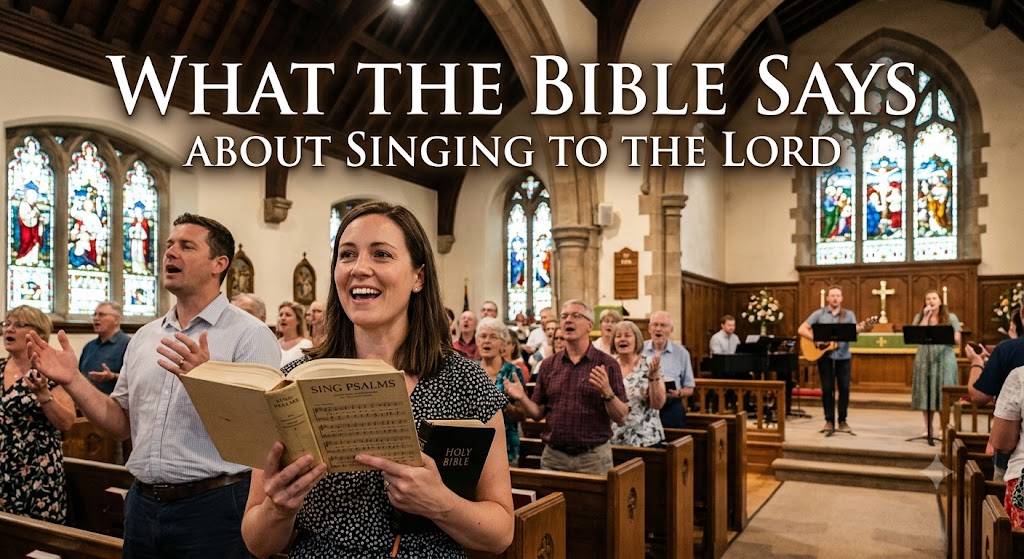
What the Bible Says About Singing to the Lord
What the Bible Says About Singing to the Lord is a subject that has inspired believers for thousands of years. From the opening pages of Scripture to the final chapters of Revelation, the Bible consistently presents singing as a meaningful expression of worship, gratitude, faith, and devotion to God. Music is far more than a form of entertainment in the biblical narrative. It is a spiritual language through which God’s people celebrate His goodness, remember His faithfulness, proclaim His greatness, and strengthen one another in faith. Understanding what the Bible says about singing to the Lord helps Christians appreciate why singing has always occupied a central place in worship and why it continues to matter today.
Many people associate singing with talented musicians, church choirs, or worship leaders standing on a stage. While these individuals certainly have an important role, the Bible paints a much broader picture. Singing is never presented as an activity reserved only for those with exceptional voices. Instead, Scripture repeatedly invites all believers to lift their voices in praise regardless of age, background, social status, or musical ability. God is far more interested in a sincere heart than in perfect musical performance.
One of the earliest biblical examples of singing appears shortly after the Israelites crossed the Red Sea. Having witnessed God’s miraculous deliverance from Pharaoh and the Egyptian army, Moses and the people broke into song. Their music was not carefully rehearsed or professionally arranged. It was a spontaneous response to God’s saving power. Exodus records them declaring that the Lord had triumphed gloriously, reminding future generations that singing naturally flows from gratitude when people recognise God’s intervention in their lives.
The Book of Psalms provides perhaps the richest collection of biblical teaching about singing. Throughout its one hundred and fifty chapters, readers repeatedly encounter invitations to sing unto the Lord. Psalm after Psalm encourages God’s people to express joy through music. Some songs celebrate victory, others express repentance, while many declare confidence during hardship. This variety demonstrates that singing is appropriate in every season of life. Whether experiencing triumph or suffering, God’s people are encouraged to bring their emotions before Him through heartfelt praise.
Psalm 96 urges believers to sing a new song to the Lord and proclaim His salvation day after day. This verse reminds Christians that worship is never meant to become stale or mechanical. God’s mercies are new every morning, His faithfulness never ends, and His blessings continue throughout every generation. Because God continually works in the lives of His people, there is always a new reason to sing.
Psalm 95 begins with an invitation to come before the Lord with thanksgiving and joyful songs. The emphasis here is not merely on producing beautiful melodies but on approaching God with thankful hearts. Gratitude transforms worship from routine religious activity into genuine communion with the Creator. When believers remember God’s provision, forgiveness, protection, and promises, singing becomes an overflow of appreciation rather than an obligation.
The Bible also connects singing with remembrance. Throughout Israel’s history, songs served as living reminders of God’s covenant, mighty works, and faithfulness. Before widespread literacy, music helped preserve biblical truth from one generation to the next. Children learned about God’s miracles through songs. Families remembered His commandments through music. Entire communities strengthened their faith by singing together. Even today, many believers can recall Bible verses and spiritual truths because they first learned them through songs.
King David stands as one of Scripture’s greatest examples of a worshipper. Although remembered as a king and warrior, David was also a gifted musician who frequently expressed his relationship with God through song. Many Psalms were written during periods of intense joy, deep sorrow, personal failure, national crisis, or overwhelming gratitude. David never hid his emotions from God. Instead, he poured them into songs that continue encouraging believers thousands of years later. His example reveals that singing allows people to approach God honestly without pretending everything is perfect.
Another important aspect of what the Bible says about singing to the Lord is that worship extends beyond personal devotion. Singing unites God’s people. Throughout the Old Testament, large gatherings regularly included corporate singing during festivals, temple worship, and national celebrations. Music created unity among worshippers by directing everyone’s attention toward the same faithful God. Individual voices combined into one declaration of praise, reminding the nation that they belonged to the Lord together.
The New Testament continues this emphasis. In Ephesians 5:19, believers are encouraged to speak to one another with psalms, hymns, and spiritual songs while singing and making melody in their hearts to the Lord. This instruction reveals that Christian singing has both a vertical and horizontal purpose. Songs glorify God while also encouraging fellow believers. When Christians sing together, they remind one another of God’s promises, strengthen each other’s faith, and build unity within the church.
Similarly, Colossians 3:16 teaches believers to let the word of Christ dwell richly among them as they teach and admonish one another through psalms, hymns, and spiritual songs, singing with gratitude in their hearts to God. Notice how closely Scripture connects singing with biblical truth. Christian music is not meant to replace God’s Word but to reinforce it. Songs rooted in Scripture help believers remember biblical principles, deepen their understanding of God, and encourage spiritual maturity.
Jesus Himself participated in singing. After sharing the Last Supper with His disciples before His arrest, the Gospels record that they sang a hymn before going to the Mount of Olives. This remarkable moment demonstrates that singing remained important even during the darkest hours leading to Christ’s crucifixion. Facing unimaginable suffering, Jesus still chose worship. His example teaches believers that praise is not limited to moments of comfort or success. Worship remains appropriate even in seasons of uncertainty and pain.
The Apostle Paul provides another powerful example. While imprisoned in Philippi alongside Silas, both men prayed and sang hymns to God despite being beaten and chained. Their circumstances offered no obvious reason for celebration, yet their worship reflected unwavering confidence in God’s sovereignty. According to Acts 16, their singing became a testimony to other prisoners before God miraculously intervened. This account demonstrates that singing can become an act of faith even when external circumstances appear hopeless.
Understanding what the Bible says about singing to the Lord also requires recognising that worship originates in the heart. Throughout Scripture, God consistently rejects empty religious rituals disconnected from genuine devotion. The prophet Isaiah rebuked people who honoured God with their lips while their hearts remained far from Him. Likewise, Jesus warned against outward displays lacking inward sincerity. Beautiful voices and polished performances cannot substitute for authentic worship flowing from hearts transformed by God’s grace.
This truth should encourage those who believe they cannot sing well. The Bible repeatedly invites believers to make a joyful noise unto the Lord. The emphasis lies on joyful participation rather than technical perfection. God values sincerity over performance. Every believer, regardless of musical ability, can honour Him through heartfelt praise.
The Bible also presents singing as an expression of thanksgiving. Gratitude appears repeatedly alongside worship because remembering God’s blessings naturally produces praise. Christians have countless reasons to thank God, including salvation through Jesus Christ, forgiveness of sins, daily provision, answered prayers, spiritual growth, eternal hope, and the gift of His presence. Singing allows believers to express appreciation in ways that ordinary conversation often cannot.
Joy is another recurring theme connected to singing throughout Scripture. Nehemiah declared that the joy of the Lord is strength. The Psalms frequently describe joyful singing because God’s character provides lasting reasons for celebration regardless of changing circumstances. Biblical joy does not ignore life’s difficulties. Instead, it rests upon confidence that God remains faithful through every season. Songs expressing this joy become declarations of trust rather than mere emotional reactions.
What the Bible says about singing to the Lord also reveals that worship points beyond earthly experiences toward eternal realities. The Book of Revelation contains numerous scenes where heavenly beings continually worship God with songs declaring His holiness, power, wisdom, and worthiness. These heavenly songs remind believers that worship is not merely a temporary earthly practice but an eternal privilege. Every song offered sincerely on earth joins a much greater chorus praising God throughout eternity.
Christian singing also serves as a powerful witness to the world. Throughout history, hymns and worship songs have proclaimed the Gospel, comforted suffering believers, strengthened persecuted churches, and introduced countless people to Jesus Christ. Music often communicates truth in memorable and emotionally powerful ways. A song centred upon biblical truth can remain in someone’s heart long after a sermon ends.
Because of this influence, Christians should carefully evaluate the songs they sing. The Bible encourages worship rooted in truth. Lyrics should accurately reflect Scripture, honour God’s character, exalt Christ, and strengthen faith. While musical styles may vary across cultures and generations, the message should consistently align with biblical teaching. Worship that prioritises emotional excitement while neglecting sound doctrine ultimately fails to fulfil its biblical purpose.
Another lesson from what the Bible says about singing to the Lord concerns humility. Worship directs attention away from human achievement and toward God’s greatness. Whenever music becomes centred upon performers seeking applause or recognition, its purpose becomes distorted. Scripture consistently points believers toward glorifying God rather than themselves. Christian musicians, worship leaders, choirs, and congregations should continually remember that every song exists ultimately for God’s honour.
The Bible also demonstrates that singing accompanies important moments of spiritual victory. Following significant acts of deliverance, God’s people frequently responded with songs of praise. These celebrations reminded future generations that every victory belonged to the Lord rather than human strength. Modern believers likewise benefit from regularly remembering answered prayers, spiritual breakthroughs, restored relationships, and God’s continuing faithfulness through songs of thanksgiving.
What the Bible Says About Singing to the Lord
Personal devotion also benefits greatly from singing. Worship does not belong exclusively inside church buildings. Throughout Scripture, individuals praised God in homes, fields, wilderness places, prisons, and private moments of prayer. Christians today can incorporate singing into daily life during morning devotions, family worship, personal prayer, or moments of reflection. Such habits help keep attention focused upon God’s presence throughout ordinary routines.
Parents also play an important role in passing faith to future generations through worship. When children regularly hear songs celebrating God’s goodness, biblical truths become deeply rooted in their hearts. Family worship creates lasting memories while reinforcing spiritual values that often remain throughout adulthood. Singing together strengthens both faith and family relationships.
Modern technology has expanded opportunities for Christian music to reach global audiences. Worship songs now cross languages, cultures, and continents with remarkable speed. While technology presents wonderful opportunities, believers should remember that the heart of worship remains unchanged. Whether accompanied by a full orchestra, a simple guitar, or no instruments at all, genuine praise depends upon sincere devotion rather than production quality.
Another encouraging truth is that God delights in the praises of His people. Throughout Scripture, worship creates an atmosphere where believers intentionally recognise God’s majesty, holiness, mercy, and love. Singing shifts attention away from personal anxieties and toward God’s unchanging character. This renewed perspective strengthens faith, produces peace, and encourages perseverance during life’s challenges.
The relationship between singing and spiritual growth should not be overlooked. Regular worship shapes attitudes, influences thought patterns, strengthens biblical understanding, and cultivates gratitude. Songs rooted in Scripture remind believers daily of God’s promises, helping them resist discouragement, fear, and temptation. In this sense, singing becomes a practical spiritual discipline contributing to lifelong Christian maturity.
Churches should therefore value congregational participation rather than creating environments where only worship teams sing. Biblical worship invites the entire congregation into active praise. Every voice matters because every believer has experienced God’s grace. Corporate singing beautifully reflects the unity of Christ’s body as diverse individuals join together in honouring one Lord.
Ultimately, what the Bible says about singing to the Lord reveals that worship is far more than music. Singing expresses love, faith, obedience, gratitude, remembrance, hope, joy, trust, and reverence. It teaches biblical truth, strengthens believers, proclaims the Gospel, unites the church, comforts the hurting, and glorifies God. Throughout both the Old and New Testaments, singing remains one of the clearest outward expressions of an inward relationship with the Lord.
As believers continue walking with Christ, they will discover fresh reasons to sing. Every answered prayer, every evidence of God’s faithfulness, every experience of His mercy, and every reminder of His grace adds another verse to the lifelong song of worship. Christians need not possess extraordinary musical ability to participate. God simply invites willing hearts that recognise His greatness and respond with sincere praise.
In the end, what the Bible says about singing to the Lord is wonderfully clear. God calls His people to sing because He alone is worthy of worship. Singing reflects thankful hearts, strengthens faith, teaches truth, encourages fellow believers, and proclaims God’s glory to the world. Whether sung quietly in private prayer, joyfully with family, or powerfully among thousands of worshippers, every sincere song offered in faith becomes an act of honour to the Creator. As long as God’s people remember His goodness, trust His promises, and rejoice in the salvation found through Jesus Christ, they will always have a reason to lift their voices and sing to the Lord with gladness.

Leave a Reply