
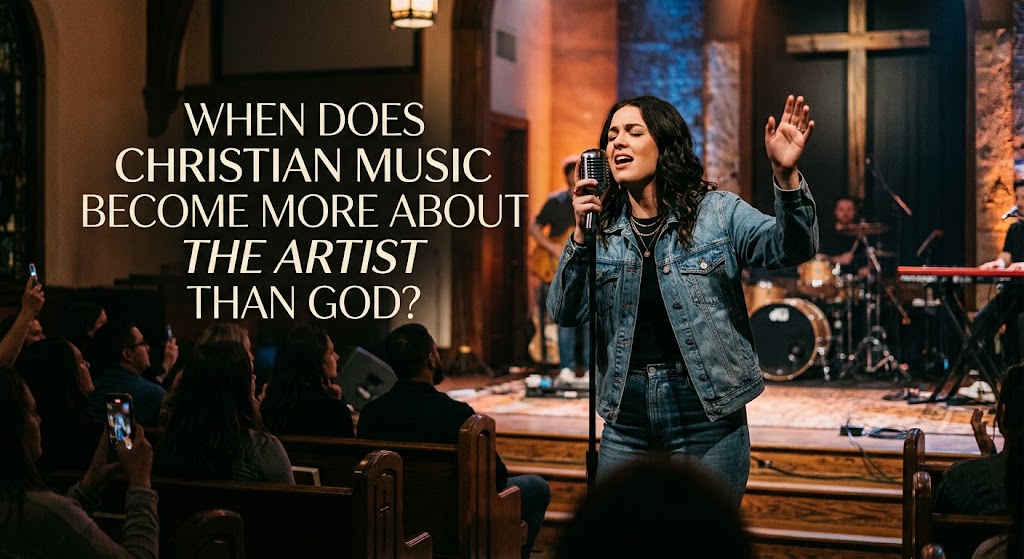
When Does Christian Music Become More About the Artist Than God?
When Does Christian Music Become More About the Artist Than God?
Christian music has always occupied a unique place in the lives of believers. Unlike many other genres, its primary purpose is not simply entertainment, artistic expression, or commercial success. At its core, Christian music exists to glorify God, encourage believers, communicate biblical truths, and point listeners toward a deeper relationship with Christ. Throughout history, songs of worship, praise, and testimony have strengthened faith, united congregations, and carried the Gospel into places where sermons could not easily reach. Yet as Christian music has grown into a global industry with millions of listeners, sold-out concerts, streaming platforms, social media followings, and celebrity-level recognition, an important question continues to surface among believers: When Does Christian Music Become More About the Artist Than God?
This question is not meant to condemn Christian musicians or suggest that success is inherently wrong. Scripture contains many examples of individuals whom God elevated to positions of influence. The issue is not visibility, popularity, talent, or even financial success. The issue is focus. The concern arises when the spotlight gradually shifts from the One being worshipped to the person leading the worship. What begins as ministry can sometimes drift into personal branding. What starts as a desire to glorify God can become a desire to glorify self. The transition is often subtle, making it difficult to recognise until the signs become impossible to ignore.
Christian music becomes more about the artist than God when listeners leave remembering the performer but not the message. Music has incredible power to influence emotions, and gifted musicians can captivate audiences with their voices, stage presence, and creativity. However, when a concert ends and people spend more time discussing the artist’s appearance, lifestyle, popularity, or personality than the truths communicated through the music, something may be out of balance. The purpose of Christian music is not merely to create emotional experiences. Its deeper purpose is to direct hearts toward God. If the artist consistently becomes the centre of attention while God becomes secondary, the ministry risks losing its original focus.
Social media has amplified this challenge in unprecedented ways. Christian artists today have access to platforms that previous generations could never imagine. They can communicate directly with fans, share behind-the-scenes content, build communities, and expand their reach globally. These opportunities are not inherently negative. In many cases, they have helped spread the Gospel to millions. However, social media also rewards self-promotion. Algorithms often favour personality-driven content, personal branding, and constant visibility. As a result, artists may feel pressure to remain relevant by continually drawing attention to themselves. Over time, the ministry can become intertwined with personal fame, making it difficult to distinguish where one ends and the other begins.
Another warning sign appears when image becomes more important than substance. The Christian music industry is increasingly competitive. Artists invest heavily in marketing, production quality, photography, video content, and branding. Excellence is valuable, and there is nothing wrong with presenting music professionally. Problems arise when the image overshadows the message. If maintaining a particular public persona becomes more important than communicating biblical truth, priorities have shifted. The Gospel does not depend on perfect branding. Its power comes from God, not from human presentation. While quality matters, it should never replace authenticity.
The issue can also emerge when commercial success becomes the primary motivation. Music production requires resources, and artists deserve compensation for their work. Scripture affirms the principle that workers deserve their wages. However, the pursuit of profit can sometimes influence creative decisions. Songs may become less focused on biblical truth and more focused on broad market appeal. Difficult topics may be avoided to prevent controversy. Lyrics may become intentionally vague so they can attract wider audiences. When financial considerations begin shaping the message more than spiritual convictions, Christian music risks becoming a product rather than a ministry.
One of the clearest indicators that Christian music has become more about the artist than God is when personal recognition becomes the ultimate goal. There is a significant difference between appreciating influence and craving attention. Every ministry leader faces the temptation of pride. Musicians are no exception. Applause, admiration, and public praise can be intoxicating. When artists begin measuring their value by followers, streams, awards, or popularity rather than faithfulness to God’s calling, they enter dangerous territory. Pride has always been one of humanity’s greatest spiritual threats because it subtly redirects worship from God to self.
History repeatedly demonstrates that gifted individuals are not immune to this struggle. Throughout Scripture, God used talented people to accomplish extraordinary things, yet many faced the temptation to take credit for what God had done. The Bible consistently reminds believers that every gift comes from God. Musical ability, creativity, influence, and opportunity are not self-generated achievements. They are gifts entrusted to individuals for God’s purposes. When artists forget this truth, they may begin acting as though the ministry belongs to them rather than to God.
At the same time, listeners share responsibility in this conversation. Christian music does not become celebrity-driven solely because artists desire fame. Audiences often contribute to the problem. Fans sometimes elevate musicians to unrealistic levels of admiration. They may defend them uncritically, obsess over their personal lives, or place them on spiritual pedestals. When believers begin treating artists like spiritual superstars rather than fellow servants of Christ, they create an environment where pride can flourish. Christian musicians are human beings with strengths, weaknesses, struggles, and limitations. They should be respected, but they should never be worshipped.
Worship itself provides an important framework for understanding this issue. True worship directs attention away from self and toward God. Whether through singing, prayer, preaching, or service, the goal remains the same: magnifying God. Christian music becomes unhealthy when it reverses this direction. Instead of helping people look upward, it encourages them to look sideways at the performer. The most effective worship leaders understand that their role is not to become the focal point. They act as guides, helping people encounter God rather than drawing attention to themselves.
This does not mean artists must avoid success or hide their personalities. Some of the most influential Christian musicians in history have achieved widespread recognition while remaining deeply committed to God. Visibility is not the problem. Influence is not the problem. The issue lies in what those things are used for. A platform can either point people toward God or toward the individual standing on it. The difference often depends on the condition of the heart.
Humility remains one of the most effective safeguards against self-centred ministry. Humble artists recognise that their calling is bigger than their careers. They understand that the message matters more than the messenger. They remain teachable, accountable, and grounded in their local faith communities. They welcome correction when necessary and resist the temptation to believe their own publicity. Humility does not mean thinking less of one’s abilities. It means recognising that those abilities ultimately belong to God.
Accountability is equally important. Isolation often creates opportunities for pride and spiritual drift. Christian artists who surround themselves only with admirers may lose perspective over time. Trusted mentors, pastors, friends, and fellow believers can provide necessary guidance and correction. They help ensure that success does not become a substitute for spiritual health. Accountability reminds artists that ministry effectiveness is measured by faithfulness, not fame.
The content of the music itself also deserves careful examination. Christian songs should communicate truths that align with Scripture. While creative expression varies widely across styles and cultures, the central message should consistently point toward God. If lyrics become increasingly focused on human achievement, personal feelings, or self-centred themes while neglecting God’s character, His work, and His truth, listeners may rightly question whether the focus has shifted. Christian music should ultimately direct attention to God’s greatness rather than human greatness.
Many believers have observed a growing trend in which worship experiences resemble entertainment events. High production values, sophisticated lighting, impressive visuals, and professional performances are not inherently wrong. They can enhance communication and create engaging experiences. However, they become problematic when spectacle overshadows substance. The goal of worship is not to impress people but to connect them with God. If audiences leave amazed by production quality yet untouched spiritually, important questions should be asked.
Another danger emerges when personal opinions, political positions, or cultural commentary become more prominent than the Gospel itself. Christian artists, like all individuals, have personal views on various issues. Yet their primary platform exists because of their connection to Christian ministry. When secondary issues consistently overshadow the central message of Christ, focus can become distorted. The Gospel must remain the foundation upon which everything else rests.
It is worth remembering that God often works most powerfully through those who are willing to decrease so that He may increase. Some of the most impactful Christian songs ever written were created not by individuals seeking recognition but by people seeking to honour God. Their influence grew precisely because their focus remained fixed on Him. Listeners sensed authenticity. They recognised genuine worship rather than manufactured spirituality.
The question, When Does Christian Music Become More About the Artist Than God?, ultimately serves as a valuable reminder for everyone involved in Christian music. It challenges artists to examine their motives. It challenges listeners to evaluate their loyalties. It challenges churches to consider their priorities. Most importantly, it challenges the entire Christian music community to remain centred on the One who inspired the music in the first place.
Christian music reaches its highest purpose when it becomes a bridge between hearts and God. It succeeds when people encounter truth, experience encouragement, find hope, and deepen their faith. It fulfils its calling when the artist becomes a vessel rather than the destination. The greatest Christian musicians are not necessarily those with the largest audiences, the highest streaming numbers, or the most awards. They are those who consistently point beyond themselves toward Christ.
In the end, Christian music becomes more about the artist than God whenever self-promotion overshadows worship, fame eclipses faithfulness, image replaces authenticity, or personal glory takes precedence over God’s glory. Yet the solution is not to reject success, creativity, or influence. The solution is to keep Christ at the centre. When artists, listeners, churches, and industry leaders remain committed to that principle, Christian music can continue fulfilling its divine purpose of glorifying God and transforming lives for generations to come.

Leave a Reply