
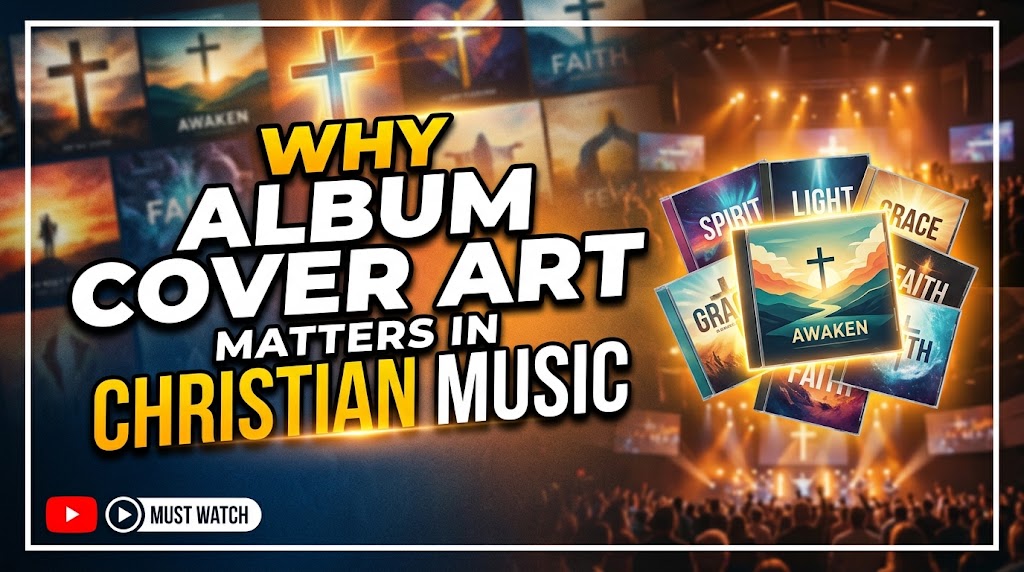
Why Album Cover Art Matters in Christian Music
Why Album Cover Art Matters in Christian Music
When I first started paying closer attention to Christian music, I used to think the most important part of releasing a song was the song itself. The vocals had to be good, the production needed to sound professional, the lyrics needed to communicate a strong message, and the artist needed to promote the release properly. Album cover art was somewhere in the background. I saw it as something that simply accompanied the music. Why Album Cover Art Matters in Christian Music.
With time, I began to realise that this way of thinking was incomplete. Before many people listen to a song, they see something. They see the artwork attached to the song on a streaming platform, social media post, music blog, playlist, website or digital store. That small square image may be the first introduction a listener has to an artist’s project.
That is why understanding why album cover art matters in Christian music is important for every gospel artist, worship leader, music producer, record label and independent musician who wants their music to be taken seriously.
Think about how often we judge things visually before we investigate them properly. If someone sends you a website that looks poorly designed, you may immediately become suspicious about the business behind it. If you see a badly presented product, you may question its quality before using it. Music is not completely different.
An album cover does not sing. It does not play an instrument. It does not preach a sermon. Yet it communicates something before the first note is heard.
For Christian musicians, this becomes even more interesting because Christian music is not simply about sound. It is often connected to faith, testimony, worship, identity, hope, pain, restoration, gratitude and personal experiences with God. The artwork can become a visual introduction to the message contained inside the music.
I have seen music projects where the song itself was powerful, but the artwork did very little to create curiosity. I have also seen situations where the artwork immediately made me want to know what the music sounded like. That experience helped me understand something simple. People do not always discover music by pressing play first. Sometimes they discover it because something they saw made them stop scrolling.
This is one of the biggest reasons why album cover art matters in Christian music.
The internet has completely changed the way music is discovered. An artist may release a song today and have it shared across Facebook, Instagram, TikTok, YouTube, WhatsApp, music blogs and streaming platforms within a short period. In many of these places, the listener encounters the artwork before hearing the complete song.
Imagine scrolling through hundreds of posts. Most of them disappear from your attention within seconds. Then you notice an interesting album cover with a strong title, beautiful photography, thoughtful typography and a visual style that communicates something about the artist. You may stop. You may read the title. You may visit the artist’s profile. You may listen to the song.
That is the job album artwork can perform.
It does not guarantee that someone will listen, but it can create the initial curiosity that leads to a listen.
Christian artists sometimes make the mistake of believing that because their music carries a spiritual message, the visual presentation does not matter. I understand the reasoning behind this. The message is more important than the packaging. The lyrics matter. The ministry matters. The heart of the artist matters.
But taking presentation seriously does not mean replacing substance with appearance.
A powerful Christian song deserves an appropriate visual identity because the artwork can help people understand the atmosphere of the project before they hear it. A worship album centred around quiet reflection might use completely different visual language from an energetic Afro Gospel project celebrating joy and praise.
The artwork can communicate whether the project feels intimate, celebratory, reflective, contemporary, traditional, youthful, serious or deeply personal.
That does not mean every Christian album needs an expensive photoshoot. In fact, some of the most effective artwork can be remarkably simple. What matters is intentionality.
A Christian artist working with a limited budget can still create attractive artwork. A good photograph, suitable typography, proper spacing, thoughtful composition and a clear concept can sometimes accomplish more than a complicated design filled with unnecessary elements.
The problem is not having a small budget. The bigger problem is releasing music without thinking about how the music will be visually represented.
Another reason why album cover art matters in Christian music is branding.
When an artist consistently presents their music with a recognisable visual identity, people can begin to associate certain colours, photography styles, typography or design approaches with that artist. Over time, this can become part of the artist’s brand.
Think about an artist who has released several projects. If every cover looks completely unrelated to the previous one, there may be no obvious visual connection between the releases. But when there is some consistency, the artist begins to create a recognisable identity.
This becomes particularly useful for independent Christian artists.
An emerging gospel artist may not yet have millions of streams or thousands of followers. They may be trying to establish themselves in a crowded digital environment where hundreds of new songs are released regularly. Their artwork becomes one of the tools available to help them stand out.
It is almost like introducing yourself at a crowded event.
Before you speak, people see you.
Your appearance is not your personality, but it creates an initial impression. In a similar way, album artwork is not the music, but it can create an initial impression of the project.
This is particularly important for music blogs.
As someone who pays attention to online content and digital publishing, I know how important presentation can be when deciding what catches attention on a website. A music blog may receive numerous submissions from artists every day. When an article about a new song is published, the featured image becomes part of the presentation.
A strong album cover can make a music article look more attractive when shared across social media. It gives bloggers something visual to work with and gives readers an immediate representation of the artist or project.
For Christian music blogs, this can be particularly valuable because many readers discover artists through featured articles, interviews, reviews and new music posts.
Album cover art can also strengthen the storytelling behind a project.
Suppose a Christian artist releases an album based on a difficult season of their life. Maybe the songs discuss disappointment, prayer, waiting, restoration and renewed faith. The artist could simply put their name and album title on a generic photograph.
Or they could develop an artwork concept that reflects the journey.
Perhaps the image represents darkness giving way to light. Perhaps it uses a photograph connected to a meaningful place. Perhaps the artist’s expression communicates vulnerability. Perhaps the typography is intentionally restrained because the project is deeply reflective.
Suddenly, the artwork becomes part of the story.
This is where I think Christian album artwork becomes especially interesting. It can give listeners another way to engage with the testimony behind the music.
A good cover can make someone ask questions.
What does this image mean?
Why did the artist choose this photograph?
What is the story behind the title?
Why does the artwork look this way?
Those questions can lead people into the music.
Another important factor is professionalism.
Nobody wants an artist’s visual identity to communicate that the project was rushed, even when the music itself took months to create. An artist can spend weeks writing songs, recording vocals, editing tracks and working with producers, then spend only a few minutes finding a random image for the cover.
That can create a disconnect.
If the music is important enough to release, the visual presentation deserves attention too.
This does not mean that Christian musicians should become obsessed with perfection. There is a difference between excellence and perfectionism. An artist can work within their available resources while still making intentional decisions.
The title should be readable. The artist’s name should be clear. The image should work on a small screen. The design should not be overcrowded. The visual concept should make sense for the music. The final file should meet the technical requirements of the platforms where it will be distributed.
These simple details can make a major difference.
Another reason why album cover art matters in Christian music is social media sharing.
Christian artists increasingly rely on social platforms to promote their releases. A new song announcement might appear as a square post, story, reel cover, WhatsApp status, Facebook post or promotional graphic.
The cover can therefore become a reusable visual asset.
One good piece of artwork can be adapted into multiple promotional materials. It can appear alongside release announcements, countdown posts, review articles, interview graphics and playlist promotions.
This is why I would encourage Christian artists to stop thinking about album artwork as merely the picture attached to an audio file.
Think of it as part of the marketing system surrounding the music.
When people share your song, the artwork may travel with it.
When a music blog writes about your project, the artwork may appear beside your name.
When someone saves your album on a streaming platform, the artwork becomes part of their music library.
When someone searches for your project online, the artwork may appear in image results or social previews.
The cover can therefore continue working long after the initial release.
There is also something emotional about seeing an album cover repeatedly. A listener may associate the artwork with a particular season of their life. Perhaps they listened to the album while travelling. Perhaps they played it during a difficult period. Perhaps one particular worship song became part of their morning routine.
Eventually, the artwork itself can trigger memories.
That is something I find fascinating about music. A song can become attached to a moment, and the visual identity of that song can become attached to the same memory.
Christian artists should therefore think carefully about what they want their artwork to communicate.
Is the project about worship?
Is it about testimony?
Is it about evangelism?
Is it about overcoming adversity?
Is it about God’s faithfulness?
Is it about joy?
Is it about repentance?
Is it about gratitude?
The answers can help guide the visual direction.
At the same time, Christian album artwork does not always need to be overly religious in appearance. Not every cover needs an open Bible, raised hands, a church building, a cross or a glowing sky.
Christian creativity can be broader than religious symbols.
An artist can communicate faith through emotion, colour, environment, photography, symbolism and storytelling. Sometimes a subtle visual concept can make people more curious than an obvious religious image.
The goal should be meaningful communication rather than simply adding Christian symbols because the music is Christian.
This is also where creativity becomes important.
Christian music is not limited to one visual style. Gospel music can be colourful, minimalist, urban, traditional, cinematic, experimental, youthful, elegant or deeply personal. Different artists can communicate Christian messages in completely different ways.
That diversity is healthy because it allows artists to express their individual identities.
One of the biggest lessons I have learned from observing digital content is that people remember what is distinctive. If everything looks the same, nothing stands out.
A Christian artist should therefore ask a simple question before releasing a project.
If someone saw this artwork without hearing the song, would it make them curious enough to investigate?
The answer does not need to be yes because the artwork is flashy. It can be yes because the artwork is beautiful, mysterious, emotional, creative or clearly connected to the artist’s story.
There is also a practical reason to take album artwork seriously. Music careers are increasingly built around digital footprints. An artist’s catalogue can remain online for years. A release may not become popular immediately. It may find an audience months or even years later.
The artwork remains attached to that project throughout its journey.
This means that an artist should not necessarily design only for the first week of promotion. The artwork should ideally remain relevant whenever somebody discovers the music.
In my view, this is the bigger lesson behind understanding why album cover art matters in Christian music. Good artwork is not a replacement for good music. It is not more important than the message. It is not a substitute for spiritual depth, songwriting ability or musical excellence.
Instead, it is one part of the complete presentation.
The song communicates through sound.
The lyrics communicate through words.
The artist communicates through their personality and testimony.
The artwork communicates visually.
When these elements work together, the listener receives a more complete introduction to the project.
Christian musicians should therefore give album cover art the attention it deserves. Whether the project is a single, EP, album or worship collection, the visual presentation should be intentional, readable, memorable and connected to the music.
You do not necessarily need a massive budget. You need a clear idea.
You need to understand what the music represents.
You need to know who you are trying to reach.
You need to choose visuals that support the message instead of distracting from it.
And most importantly, you need to remember that people may see your music before they hear it.
That single fact changes the way album artwork should be viewed.
The next time a Christian artist prepares to release a new project, I hope they do not treat the cover as an afterthought. I hope they ask what story the artwork is telling, what emotion it creates and what impression it leaves.
Because before the first lyric is heard, before the first chorus begins and before the listener decides whether to add the song to a playlist, there may already be one silent introduction sitting on the screen.
That introduction is the album cover.
And that is exactly why album cover art matters in Christian music.

Leave a Reply