
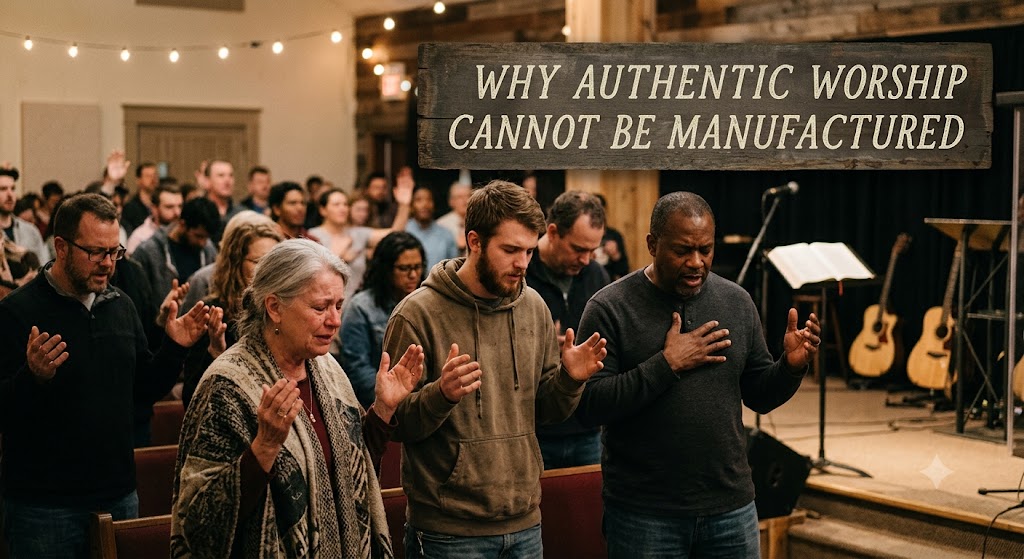
Why Authentic Worship Cannot Be Manufactured
Authentic worship cannot be manufactured. It cannot be packaged, programmed, rehearsed into existence, or produced by the latest technology. While creativity, musical excellence, and thoughtful preparation have their place in Christian gatherings, they can never replace a heart that is genuinely surrendered to God. This is why the truth that authentic worship cannot be manufactured remains as important today as it was in biblical times. In an age where production quality often receives more attention than spiritual depth, believers need to remember that God has never been impressed by appearances alone. He has always looked beyond the outward performance and into the condition of the heart.
Many people associate worship with songs, choirs, instruments, concerts, or church services. While these expressions are valuable, worship itself goes much deeper. Worship begins long before the first note is played and continues long after the final song has ended. It is a lifestyle of honouring God with every thought, decision, conversation, and action. A person can sing every lyric correctly and still fail to worship if the heart is distant from God. Likewise, someone with no musical ability can offer worship that deeply pleases the Lord because it flows from sincere love, gratitude, humility, and obedience.
The reason authentic worship cannot be manufactured is because it is born from a genuine relationship with God. Relationships cannot be faked indefinitely. They are built through trust, communication, sacrifice, and love. In the same way, true worship grows naturally from spending time in God’s presence, studying His Word, praying faithfully, and walking in obedience. No amount of stage lighting, emotional music, or impressive presentation can create what only the Holy Spirit can produce within a surrendered believer.
Throughout Scripture, God repeatedly rejected empty religious performances while welcoming sincere hearts. The prophets often challenged people who honoured God with their lips while their hearts remained far from Him. Their ceremonies were flawless, their sacrifices were plentiful, and their traditions were carefully observed, yet God was not pleased because genuine devotion was absent. This powerful lesson still speaks today. Churches can organise excellent worship services, but unless the people involved are seeking God sincerely, something essential is missing.
One of the greatest dangers facing modern worship is the temptation to confuse emotional experiences with spiritual encounters. Music has the ability to move human emotions regardless of its message. A beautiful melody can make someone cry, a powerful rhythm can create excitement, and an inspiring performance can leave lasting memories. However, emotional reactions alone do not prove that authentic worship has taken place. Authentic worship cannot be manufactured through emotional manipulation. It happens when hearts respond truthfully to the greatness, holiness, mercy, and love of God.
This does not mean emotions are unimportant. God created human emotions, and many biblical worshippers expressed deep joy, sorrow, gratitude, awe, and reverence before Him. David danced before the Lord, the psalmists cried out in desperation, and countless believers throughout history have experienced overwhelming emotion while worshipping. The difference is that genuine emotion follows authentic devotion rather than replacing it. When people attempt to manufacture emotional moments without cultivating true intimacy with God, worship becomes centred on feelings instead of faith.
Authentic worship cannot be manufactured because it requires humility. Pride constantly seeks recognition, applause, and admiration. Worship, however, shifts all attention toward God. A worshipper who genuinely understands God’s greatness becomes less concerned about personal reputation and more concerned about glorifying Christ. This is why some of the most powerful acts of worship in Scripture happened quietly, away from large crowds and public attention. God sees what others overlook. He values sincerity over spectacle.
Jesus demonstrated this truth during His conversation with the Samaritan woman. He explained that the Father seeks those who worship Him in spirit and in truth. These two qualities cannot be artificially created. Worship in spirit involves the work of the Holy Spirit transforming the believer from within. Worship in truth is rooted in God’s revealed Word and the reality of who He is. Neither can be replaced by impressive performances or carefully designed experiences. Authentic worship cannot be manufactured because both spirit and truth originate with God Himself.
Modern technology has provided incredible opportunities for Christian ministry. Worship songs can reach millions through streaming platforms. Churches can broadcast services globally. Musicians can collaborate across continents. These developments are wonderful blessings when used wisely. Yet technology itself cannot create authentic worship. A perfectly mixed livestream cannot guarantee genuine devotion. A professionally produced worship video cannot substitute for a surrendered heart. Digital excellence becomes meaningful only when it supports authentic faith rather than attempting to replace it.
Many worship leaders carry significant responsibility because they influence how congregations approach God. The pressure to impress audiences can become overwhelming. Expectations continue to grow regarding musical quality, visual presentation, and stage performance. While striving for excellence honours God, excellence must never become the ultimate goal. Authentic worship cannot be manufactured by flawless musicianship alone. A technically perfect performance without spiritual authenticity remains incomplete. Conversely, sincere worship offered with limited resources often carries extraordinary spiritual impact because God responds to humble hearts.
Church history consistently reminds us that spiritual revivals rarely begin with elaborate productions. They begin when ordinary believers humble themselves before God, confess their sins, seek His presence, and surrender their lives completely. Songs often emerge from these moments of revival, but the songs themselves are not the source. They become expressions of hearts already transformed by God’s grace. This explains why certain hymns and worship songs continue to inspire believers generations after they were written. Their lasting influence comes not merely from poetic language or beautiful melodies but from the authentic spiritual experiences that gave birth to them.
Another reason authentic worship cannot be manufactured is because true worship involves sacrifice. Throughout Scripture, worship consistently required people to offer something valuable to God. Sometimes it involved material offerings. Sometimes it required personal comfort, reputation, or convenience. In the New Testament, believers are encouraged to present their lives as living sacrifices. Genuine worship therefore extends beyond music into everyday obedience. Choosing honesty when dishonesty appears profitable, forgiving those who have caused pain, serving others without seeking recognition, and remaining faithful during hardship all become acts of worship because they demonstrate wholehearted devotion to God.
The commercialisation of Christian music presents another challenge worth considering carefully. Music ministries require financial resources, and Christian artists deserve fair compensation for their work. However, whenever commercial success becomes the primary motivation, worship risks becoming a product instead of an offering. Authentic worship cannot be manufactured for market demand. Songs written primarily to satisfy trends may achieve popularity but fail to produce lasting spiritual fruit. By contrast, songs birthed through prayer, Scripture, and genuine encounters with God often continue blessing believers long after commercial attention fades.
Social media has created both opportunities and temptations for Christian musicians and worship leaders. Platforms allow encouraging messages and worship songs to reach audiences across the world instantly. At the same time, they can encourage comparison, self-promotion, and the pursuit of popularity. Numbers such as followers, views, and likes can easily become measures of perceived success. Yet heaven measures worship differently. God examines motives that no audience can see. Authentic worship cannot be manufactured through online influence because influence without intimacy eventually becomes empty.
Many believers mistakenly believe worship depends on atmosphere alone. They assume dim lighting, gentle instruments, or carefully selected songs automatically create worshipful environments. While physical settings may help people concentrate, they do not generate worship. A believer can worship sincerely while driving alone, working quietly, walking through nature, or praying beside a hospital bed. Likewise, someone can remain spiritually disengaged inside the most beautifully designed sanctuary. Authentic worship cannot be manufactured by external surroundings because worship originates within the heart.
Gratitude plays a central role in genuine worship. People who regularly remember God’s goodness naturally respond with thanksgiving. Every answered prayer, every undeserved blessing, every moment of divine protection, and every evidence of grace becomes another reason to praise Him. Manufactured worship often focuses on creating impressive moments, while authentic worship simply responds to the reality of who God is and what He has done. Gratitude transforms ordinary days into opportunities for worship because thankful hearts continually recognise God’s faithfulness.
Authentic worship also requires truthfulness. God already knows every fear, failure, disappointment, and struggle within each believer. There is no need to pretend before Him. Some of the most powerful prayers recorded in Scripture include honest questions, painful emotions, and deep cries for help. These expressions were not signs of weak faith but evidence of authentic relationships with God. Worship does not require pretending everything is perfect. It invites believers to bring every part of life before the Lord with complete honesty, trusting His mercy and grace.
One of the beautiful characteristics of authentic worship is its simplicity. While large gatherings and professional worship teams have tremendous value, authentic worship remains accessible to every believer regardless of age, education, financial status, or musical ability. A child singing sincerely, an elderly believer praying quietly, a family reading Scripture together, or an individual thanking God during difficult circumstances all demonstrate worship that pleases the Lord. Authentic worship cannot be manufactured because God has never restricted it to those with extraordinary gifts or impressive platforms.
Obedience remains one of the clearest demonstrations of worship. Singing songs while deliberately ignoring God’s commands creates a painful contradiction. Jesus taught that those who love Him will keep His commandments. Therefore, everyday faithfulness becomes an extension of worship. Integrity at work, compassion toward neighbours, generosity toward those in need, purity in private life, and faithfulness within families all reveal hearts devoted to God. Worship expressed through music gains credibility when supported by lives marked by obedience.
The Holy Spirit plays an indispensable role in authentic worship. Human effort alone cannot produce lasting spiritual transformation. The Spirit convicts, comforts, teaches, empowers, and continually points believers toward Christ. When worship is surrendered to His leadership, people experience conviction instead of mere inspiration, transformation instead of temporary excitement, and lasting spiritual growth instead of emotional highs that quickly disappear. Authentic worship cannot be manufactured because only the Holy Spirit can awaken hearts to the reality of God’s presence.
Why Authentic Worship Cannot Be Manufactured
Believers should never become discouraged if their worship feels quiet or unnoticed. God’s approval has never depended upon public recognition. Some of history’s greatest worshippers lived ordinary lives hidden from human applause. Their faithfulness mattered because heaven saw their devotion. In a culture fascinated by visibility and influence, this truth brings tremendous freedom. Worship is not about being seen by people but about honouring God regardless of who notices.
Churches that desire authentic worship should invest as much energy in discipleship as they do in rehearsals. Musicians benefit from growing spiritually alongside developing technically. Prayer meetings remain as important as practice sessions. Bible study deserves equal attention alongside song selection. Leaders who cultivate humility, accountability, and genuine relationships with God help create environments where authentic worship naturally flourishes. Preparation matters, but preparation should support spiritual authenticity rather than attempt to replace it.
Every believer can evaluate personal worship by asking simple but profound questions. Is my heart genuinely focused on God or merely participating in familiar routines? Am I seeking His presence throughout the week or only during church services? Do my daily decisions reflect the songs I sing on Sunday? Am I pursuing God’s approval above human praise? Honest reflection often reveals areas where spiritual growth is needed. Fortunately, God welcomes every sincere seeker with grace, forgiveness, and renewed strength.
The encouraging reality is that authentic worship is available to everyone who comes before God with humility and faith. It does not require expensive equipment, remarkable musical talent, perfect circumstances, or public recognition. It begins with recognising God’s worth, responding to His grace, and offering Him a surrendered life. As believers grow in love for Christ, worship becomes increasingly natural because it flows from transformed hearts rather than external pressure.
Ultimately, the statement authentic worship cannot be manufactured is not a criticism of preparation, creativity, or musical excellence. Instead, it is a reminder that these valuable tools must always remain servants rather than substitutes. The greatest worship songs, the most gifted musicians, the finest church buildings, and the most advanced technology all reach their highest purpose only when they direct hearts toward genuine encounters with the living God. When believers worship in spirit and in truth, their praise becomes more than beautiful music. It becomes the sincere response of redeemed people who recognise the immeasurable worth of their Creator and Saviour. That kind of worship cannot be bought, copied, rehearsed into existence, or artificially produced because authentic worship cannot be manufactured. It is born in hearts transformed by God’s grace, sustained through daily fellowship with Him, and expressed in lives that continually declare His glory.

Leave a Reply