
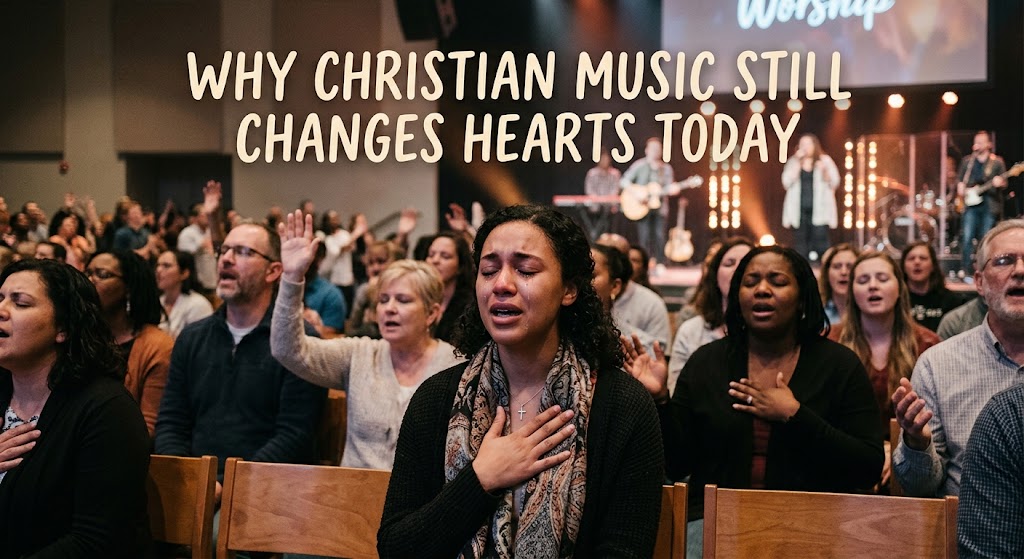
Why Christian Music Still Changes Hearts Today
Why Christian Music Still Changes Hearts Today is a question worth asking in a world where music has become one of the most powerful forms of communication. People listen to music when they are happy, sad, lonely, hopeful, angry, confused, celebrating or searching for answers. A song can take someone back to a particular moment in their life, bring tears to their eyes, restore a forgotten memory or give them the courage to keep moving when everything seems to be falling apart. Christian music carries that emotional power while communicating something deeper: faith, hope, grace, love, forgiveness and the message of Jesus Christ.
Christian music has existed in different forms for centuries, yet its influence has not disappeared. Instead, it continues to evolve with every generation. From traditional hymns sung in churches to contemporary worship, gospel, Christian hip hop, Afro gospel and other modern expressions of faith, Christian music continues to reach people in places that sermons and conversations sometimes cannot. This is one of the strongest reasons why Christian music still changes hearts today.
At its core, Christian music speaks to the human need for hope. Life can be incredibly difficult. People experience financial pressure, broken relationships, disappointment, grief, failure, rejection and uncertainty about the future. Even people who appear successful on the outside may be fighting private battles that nobody knows about. During such moments, a Christian song can become more than entertainment. It can become a reminder that a difficult season is not necessarily the end of the story.
When someone hears lyrics reminding them that God has not abandoned them, those words can take on personal meaning. A song about God’s faithfulness can sound completely different to someone who has just survived a difficult season. A song about grace can become deeply meaningful to someone struggling with guilt. A song about restoration can bring hope to someone who believes their life is already beyond repair. This emotional connection is one reason why Christian music continues to touch hearts across generations.
Another reason why Christian music remains powerful is its ability to communicate biblical truths in memorable ways. People may forget a long conversation, a sermon point or something they read online, but a melody can remain in their minds for years. Music combines words, emotion and repetition, making important messages easier to remember. When Christian songs are built around biblical truths, those truths can become part of someone’s daily thoughts.
A person may wake up singing a worship song about God’s goodness. They may listen to a gospel song while travelling to work. They may play worship music while cooking, exercising or studying. Someone going through a difficult night may put on a Christian playlist and simply listen. In each of these situations, music creates an opportunity for spiritual reflection.
This does not mean that every Christian song automatically changes lives. Music is not magic, and a song does not replace personal faith, prayer, Scripture or Christian community. However, music can create an atmosphere where people become more receptive to reflection. It can remind them of truths they already know and introduce spiritual ideas to people who may never walk into a church.
This is particularly important in today’s digital world. Christian music is no longer restricted to Sunday services, church choirs or Christian radio stations. Through streaming platforms, social media, video platforms and music apps, a Christian song can reach someone thousands of kilometres away from the artist who recorded it. A worship song created in one country can become meaningful to listeners in completely different cultures.
The growth of African Christian music is a powerful example of this development. Gospel and Christian artists are increasingly blending traditional sounds with contemporary production, creating music that feels culturally familiar while communicating timeless Christian messages. Afro gospel, contemporary gospel, worship and Christian-inspired sounds are connecting with younger audiences who may not always respond to traditional forms of church music.
This evolution matters because Christian music has always adapted to the language and musical expressions of its audience. The message can remain rooted in Christian faith while the sound changes. What matters is not whether a song sounds like music from fifty years ago, but whether its message communicates truth and points people towards God.
Young people especially live in a world saturated with music. They hear songs everywhere. Music is part of social media, films, advertisements, entertainment and everyday conversations. If Christian music wants to reach younger generations, it must understand the culture without compromising the message. Modern Christian artists who create honest, relatable and excellent music have an opportunity to meet young listeners where they already are.
Christian music can also change hearts because it gives people permission to express emotions they sometimes struggle to put into words. Faith does not mean pretending that everything is perfect. The Bible contains songs and prayers filled with joy, fear, grief, confusion, repentance, hope and celebration. Christian music can continue that tradition by giving believers language for their emotional and spiritual experiences.
There are songs for moments when someone feels victorious and songs for moments when they feel completely broken. There are songs about gratitude, repentance, surrender, trust, worship and perseverance. This emotional range allows Christian music to meet people at different stages of life.
Consider someone experiencing grief. Telling a grieving person to “stay strong” may not always provide comfort. But hearing a song that acknowledges pain while pointing towards eternal hope can feel different. The person may cry while listening, but those tears can become part of the healing process. Christian music does not necessarily remove pain. Sometimes its greatest contribution is reminding people that they do not have to face pain without hope.
The same principle applies to people struggling with failure. Many people carry regret over decisions they wish they could change. They may believe their mistakes define them. Christian music that focuses on mercy, forgiveness and redemption can challenge that belief. It can remind listeners that their worst moment does not have to become their entire identity.
This is where the message of grace becomes particularly powerful. Christianity teaches that God’s love is not based on human perfection. Christian music repeatedly communicates this message through songs about redemption, mercy and restoration. When those themes are expressed sincerely, they can reach people who have become convinced that they are unworthy of another opportunity.
Christian music also changes hearts by encouraging gratitude. Modern life can make people constantly focus on what they do not have. Social media can intensify comparison by exposing people to carefully selected images of other people’s success, relationships, possessions and lifestyles. Christian songs that encourage gratitude can redirect attention towards what truly matters.
A song about God’s faithfulness can cause someone to stop and remember how far they have come. A worship song can turn attention away from temporary problems and towards eternal realities. This shift in perspective can influence how a person thinks, behaves and responds to challenges.
There is also a communal dimension to Christian music that should never be underestimated. Singing together creates a sense of unity. When hundreds or thousands of people sing the same words, individual voices become part of something larger. This can create a powerful sense of belonging.
Church worship is not simply about listening to talented singers. At its best, it involves a community expressing shared faith. People from different backgrounds, ages and circumstances can stand together and sing about the same God. That shared experience can strengthen relationships and remind believers that they are not walking through life alone.
Why Christian Music Still Changes Hearts Today
Christian music can also cross cultural and denominational boundaries. A song may begin in one church or country and eventually become known around the world. The language may change, the instruments may change and the musical style may change, but the central message can remain recognisable. This demonstrates the remarkable ability of music to connect people beyond geographical and cultural differences.
Another important reason why Christian music still changes hearts today is authenticity. People can often recognise when something feels artificial. In an age where digital technology can make almost anything look polished, genuine emotion has become increasingly valuable. Christian music that comes from real experiences of faith, struggle, doubt, gratitude and transformation can resonate deeply with listeners.
Some of the most powerful Christian songs are born from difficult seasons. An artist may write about trusting God after experiencing loss. Another may write about forgiveness after making serious mistakes. Someone else may write about hope after years of disappointment. When listeners discover the story behind a song, the music can become even more meaningful.
This is why Christian artists have an important responsibility. Their influence extends beyond their voices. They are communicating ideas, shaping conversations and representing Christian faith to audiences that may have limited exposure to the Bible or the church. Talent is important, but character, sincerity and the message behind the music matter just as much.
Christian music also has an important role in evangelism. Not everyone will attend a church service, read a Christian book or watch a long sermon. But someone may click on a song because the title catches their attention. They may listen because the melody sounds beautiful. They may return because the lyrics describe something they are experiencing. Eventually, the message may cause them to ask deeper questions about faith and God.
That is the unique opportunity music provides. It can open a door before someone realises that a door has been opened.
A person who has never considered Christianity seriously may hear a Christian song about God’s love and become curious. Someone who has walked away from faith may hear an old worship song and remember what they once believed. Someone who feels spiritually empty may discover a gospel artist through social media and begin exploring Christian messages. These moments may appear small, but they can become significant turning points.
Christian music can also encourage people to pray. Sometimes people do not know what to say when they pray. They may feel overwhelmed or spiritually tired. A worship song can provide words when their own words seem unavailable. They can sing along, sit quietly or simply listen. In that moment, music can help create space for reflection and prayer.
The continued popularity of Christian music also demonstrates that people are still searching for meaning. Technology has changed how people communicate, work and entertain themselves, but it has not removed the fundamental questions of human existence. People still ask who they are, why they are here, whether their lives have meaning and whether there is hope beyond their current circumstances.
Christian music addresses these questions from a perspective centred on faith in God. It reminds listeners that life is more than possessions, popularity, status and temporary success. It points towards purpose, eternity and a relationship with God.
This is especially important in a culture that often measures people by visible achievements. A person may have money and still be unhappy. Someone may have thousands of followers and still feel lonely. A successful career does not automatically produce inner peace. Christian music can challenge the assumption that external success is the ultimate measure of a meaningful life.
It reminds people that the condition of the heart matters.
Of course, Christian music also faces challenges. The Christian music industry has become increasingly commercial, and there can be pressure for artists to prioritise popularity, streaming numbers and viral moments. There is nothing inherently wrong with commercial success, but the danger comes when popularity becomes more important than purpose.
A song does not have to become a global hit to change someone’s life. One listener may hear a song at exactly the moment they need encouragement. That person may never comment, share the song or tell the artist what happened. Yet the music may have made a lasting difference.
This is an important reminder for Christian musicians. Impact cannot always be measured by numbers. A million streams are impressive, but one transformed life is also significant. A song that reaches a small audience can still fulfil a meaningful purpose.
Christian music also reminds believers that worship is not limited to a stage. The true purpose of Christian music should ultimately be bigger than performance. It should encourage people to live out what they sing. If someone sings about forgiveness but refuses to forgive, the message has not fully reached the heart. If someone sings about generosity but lives entirely for personal gain, the song’s message has not yet become a lifestyle.
The most powerful Christian music does more than produce emotional moments. It inspires action. It encourages people to love others, forgive, serve, pray, trust God, pursue holiness and remain faithful during difficult seasons.
This is why Christian music still changes hearts today. It speaks to emotions, memories, struggles, dreams and spiritual hunger. It carries messages that can remain relevant regardless of technological change. The instruments may change. Production styles may change. Distribution methods may change. Musical trends may come and go. But the human need for hope, love, forgiveness and meaning remains.
Christian music continues to evolve because every generation needs to hear the message of faith in a language it understands. Today’s Christian artists have access to tools previous generations could never have imagined. They can record from home, distribute music globally, reach audiences through social media and collaborate with artists across continents. With these opportunities comes the responsibility to create music that is not only entertaining but meaningful.
Ultimately, the reason Why Christian Music Still Changes Hearts Today is simple. Music reaches places that information alone cannot always reach. It can bypass intellectual resistance and touch emotion. It can remind people of forgotten truths. It can give language to pain, hope to the discouraged and courage to those who are struggling. When that music carries a message centred on Jesus Christ, it can become a powerful expression of faith.
A Christian song may be heard casually today and remembered years later. A lyric may become someone’s prayer. A melody may remind someone of God’s faithfulness during a difficult season. A worship song may encourage a person who was ready to give up. A gospel song may cause someone who has never considered Christianity to ask questions about Jesus.
That is the enduring power of Christian music.
The world will continue to change. Musical genres will continue to evolve. New artists will emerge, new platforms will become popular and new generations will create their own sounds. Yet the human heart will continue to search for hope and meaning. As long as Christian music continues to communicate truth with sincerity, creativity and spiritual depth, it will have the ability to reach that heart.
Why Christian Music Still Changes Hearts Today is therefore not merely a question about music. It is a question about the enduring power of faith expressed through sound. It is about the tears shed while listening to a worship song, the courage gained from a gospel anthem, the memories created during congregational singing and the quiet moments when a person hears a message that feels as though it was written specifically for them.
Christian music continues to matter because people continue to matter. Behind every stream is a listener. Behind every listener is a story. Behind every story are struggles, dreams, fears and hopes. And sometimes, all it takes is one song to remind someone that their story is not over.
That is why Christian music still changes hearts today. It does not simply entertain the ears. At its best, it speaks to the soul.

Leave a Reply