
Why Gospel Music Continues to Inspire Millions
Why Gospel Music Continues to Inspire Millions
There are moments when I listen to a gospel song and realise that I am no longer paying attention to the singer, the instruments or even the quality of the production. Something deeper has happened. The words begin to remind me of things I have experienced, prayers I have prayed, battles I have survived and moments when I needed encouragement but did not know where to find it. That is one of the reasons why gospel music continues to inspire millions of people around the world.
I have noticed that gospel music has a unique way of meeting people exactly where they are. You can listen to a song when you are happy and suddenly feel even more grateful. You can play another song when you are discouraged and find yourself gathering strength again. You can hear a worship song during a difficult season and discover that the lyrics express what you have been struggling to say in prayer. This emotional connection is one of the reasons why gospel music continues to inspire millions across different generations, cultures and backgrounds.
Growing up, I discovered that music could communicate certain things that ordinary conversation could not. Someone could tell you that everything would be alright, and you might appreciate the encouragement, but hearing a powerful gospel song about trusting God during difficult circumstances could make those same words feel completely different. The melody, the lyrics and the emotion of the singer could create an experience that stayed with you long after the song had ended.
That experience is not limited to one country or one generation. Gospel music has travelled far beyond the traditional church environment. Today, people discover gospel songs through streaming platforms, social media, YouTube, radio, television, church services and personal recommendations. A song recorded in one part of the world can reach listeners thousands of kilometres away within a very short time. The growth of digital music has made it easier than ever for gospel artists to share messages of faith with a global audience.
One reason why gospel music continues to inspire millions is its emphasis on hope. Life can be unpredictable. People experience financial difficulties, broken relationships, disappointment, grief, uncertainty, rejection and countless other challenges. During those moments, people often search for something that gives them a reason to keep going. Gospel music frequently provides that reminder by focusing on faith, God’s promises, perseverance, gratitude, redemption and the possibility of a better tomorrow.
I have personally found that the timing of a song can make a huge difference. A song that I might ignore on an ordinary afternoon can suddenly become meaningful during a difficult season. The lyrics may not have changed, but my circumstances have. Suddenly, a line that sounded ordinary before becomes deeply personal. That is one of the remarkable things about gospel music. Its message can remain constant while its meaning becomes more powerful as our lives change.
Another reason why gospel music continues to inspire millions is that it gives people an opportunity to express emotions honestly. There are times when people are grateful but cannot find the right words. There are times when they are hurting but do not know how to explain the pain. There are also moments when someone simply wants to celebrate. Gospel music provides a language for many of these emotions.
Praise songs can express joy. Worship songs can express reverence. Songs about God’s faithfulness can express gratitude. Songs about difficult seasons can give words to pain. Songs about victory can help people celebrate what they believe God has done in their lives. This emotional range makes gospel music relevant to many different experiences.
The lyrics are also important. A memorable gospel song often carries a message that listeners can take with them beyond the music itself. Instead of simply providing entertainment, the song can become a reminder throughout the day. A person may remember a particular lyric while travelling to work, preparing a meal, studying, exercising or facing a difficult decision.
This is particularly powerful when the lyrics are connected to biblical ideas. Scripture has influenced Christian music for centuries, and modern gospel music continues that tradition in many different forms. Some songs directly quote or adapt biblical passages, while others communicate themes such as faith, mercy, forgiveness, love, salvation and perseverance.
I have always found it interesting how easily people can remember a song compared with a long speech. You might forget the exact words of a sermon you heard several months ago, but a chorus you learned years ago can suddenly come back to your mind. There is something about melody and repetition that makes certain messages easier to remember. This gives gospel music a powerful role in helping people keep important spiritual ideas close to their hearts.
Gospel music also inspires millions because it tells stories. Behind many gospel songs is a story of struggle, transformation, gratitude or faith. Sometimes the artist is singing about something deeply personal. At other times, the song speaks about an experience shared by millions of believers.
When I hear a song that sounds like it came from someone’s real experience, I respond differently. I am not simply listening to words arranged over music. I am hearing someone’s testimony. I am hearing how another person interpreted a difficult experience and found a reason to continue believing.
This is particularly noticeable in African gospel music. Across Africa, gospel music has developed into a diverse and energetic musical culture. Different countries, languages, traditions and musical styles have influenced the way Christian music is written and performed. Yet the central themes of faith and hope can still connect listeners across those differences.
Nigeria, for example, has produced gospel artists whose music reaches audiences far beyond the country’s borders. The combination of contemporary production, African rhythms, powerful vocals and Christian messages has helped Nigerian gospel music gain international attention. The same thing is happening in other parts of Africa, where local musical traditions are being combined with modern gospel sounds.
This development shows that gospel music does not have to sound exactly the same everywhere to communicate a common message. The sound may change, the language may change and the instruments may change, but themes such as hope, faith, gratitude and worship remain understandable.
Another important factor is the accessibility of gospel music. Years ago, discovering a new Christian artist might have required buying an album, listening to a particular radio station or attending a church event. Today, a listener can discover hundreds of gospel artists with a smartphone and an internet connection.
A short video containing a gospel song can introduce an artist to thousands or even millions of people. Someone can hear a chorus on social media, search for the complete song and add it to a personal playlist within minutes. This has completely changed how Christian music spreads.
Streaming has also created opportunities for independent gospel artists. An artist does not necessarily need to depend entirely on traditional music industry structures to reach listeners. With the right music, consistency, promotion and audience connection, independent musicians can build communities around their work.
But technology alone does not explain why gospel music continues to inspire millions. The technology makes distribution easier, but the message is what gives the music lasting meaning.
People are not simply looking for songs. Many are looking for encouragement. They are looking for something that speaks to their circumstances. They are looking for reminders that their present situation is not necessarily the end of their story.
This is why a gospel song can become associated with a particular season of someone’s life. One song may remind someone of their university years. Another may remind someone of a difficult financial period. Another may take them back to a church service where they experienced an important moment. Music has an extraordinary ability to connect memories with emotions.
I have experienced this myself. Sometimes an old song comes on unexpectedly, and within seconds I am transported back to a particular period of my life. I remember where I was, what I was thinking about and what I was dealing with at the time. The song becomes more than entertainment. It becomes a timestamp.
This is one reason gospel music can remain relevant for decades. A song may have been released many years ago, but if its message speaks to a universal human experience, people can continue discovering it. A new generation can hear an old song and find meaning in it even though they were not around when it was originally recorded.
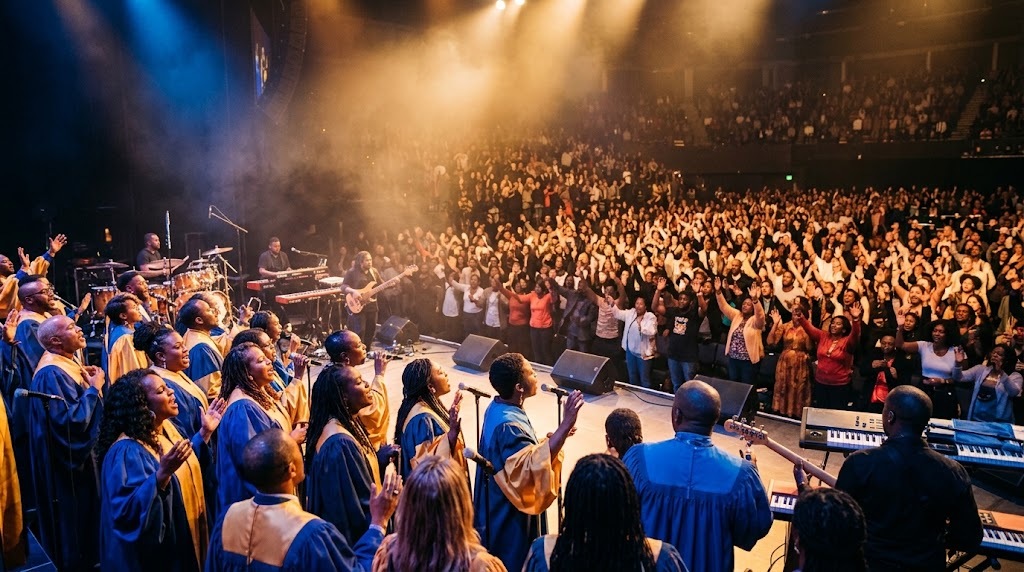
Gospel music also creates community. There is something powerful about thousands of people singing the same words together. Whether it happens in a church, concert, conference or other Christian gathering, collective singing can create a strong sense of connection.
When people sing together, individual voices become part of something larger. The experience can remind people that they are not alone in their faith or their struggles. They are part of a community of people who share common beliefs and hopes.
This communal quality is one reason worship music remains an important part of Christian gatherings. The music does not merely fill silence between other activities. It can help create an environment where people reflect, pray, celebrate and express their faith.
Another reason why gospel music continues to inspire millions is the diversity of artists creating it. Gospel music is no longer represented by only one sound. There are traditional gospel choirs, contemporary worship groups, Afro Gospel artists, Christian hip hop musicians, gospel singers, Christian rock bands, acoustic performers and many other expressions of Christian music.
This diversity means that different listeners can find music that speaks to them. A young listener might connect with a contemporary Christian hip hop song while another person may prefer a traditional choir arrangement. Someone else may prefer a quiet worship song accompanied by a piano or acoustic guitar.
The sound can be different, but the purpose of the music can remain connected to Christian faith.
The younger generation has also played an important role in the evolution of gospel music. Young Christian artists are experimenting with production techniques, musical genres and digital platforms while continuing to communicate messages of faith.
Some people may debate whether certain modern sounds should be considered gospel music, but the conversation itself demonstrates how constantly the genre is evolving. Music changes with society, and Christian musicians are finding new ways to communicate timeless themes to contemporary audiences.
At the same time, traditional gospel music continues to matter. Older songs, hymns and choir arrangements remain meaningful to millions because they carry memories and messages that have survived generations. There is something special about hearing a song that parents, grandparents and children can all recognise.
That connection between generations is another reason why gospel music continues to inspire millions. It creates a bridge between the past and the present.
Gospel music can also encourage people to keep going when their circumstances have not changed yet. This is important because inspiration is not always about receiving an immediate solution. Sometimes inspiration simply means finding enough strength to take the next step.
A person waiting for employment may listen to a song about trusting God. Someone recovering from disappointment may find comfort in a song about restoration. Someone celebrating a major achievement may use a gospel song to express gratitude. The same genre can meet people at completely different points in their journeys.
That is why I believe the power of gospel music is not simply found in the voices of the singers or the quality of the production. Its deeper strength comes from the connection between message and experience.
A beautiful melody may attract someone’s attention, but a meaningful message can make them stay.
This is also why gospel artists carry an important responsibility. Music has influence. A song can shape someone’s mood, encourage reflection and become part of someone’s personal story. The words chosen by an artist can therefore have an impact far beyond the recording studio.
The most memorable gospel songs often feel sincere. They do not simply sound impressive. They communicate something the listener can believe, understand or relate to. Whether the song is energetic praise or quiet worship, authenticity can make a significant difference.
As gospel music continues to evolve, I believe its ability to inspire people will remain connected to something very simple: people will always need hope.
Technology will change. Musical styles will change. Platforms will change. Artists will come and go. Production techniques will continue to improve. But people will continue to experience joy, pain, uncertainty, gratitude, loss, victory and hope.
As long as those experiences remain part of human life, there will be room for music that speaks to them.
That is ultimately why gospel music continues to inspire millions. It gives people words when they have none. It reminds people of what they believe. It connects generations. It crosses borders and languages. It transforms personal experiences into songs that other people can understand. It creates moments of celebration and reflection. Most importantly, for millions of Christians around the world, it provides a musical expression of their relationship with God.
The next time you hear a gospel song that moves you deeply, do not dismiss that experience as simply good music. Pay attention to the message. Think about why the lyrics connected with you. Consider the season of life you are in and why those particular words feel relevant at that moment.
Sometimes a song becomes powerful because of the singer. Sometimes it is the melody. Sometimes it is the memories attached to it. But sometimes, it is simply because the message arrived at exactly the right moment.
And perhaps that is the enduring beauty of gospel music. It does not have to remain in one generation, one country, one language or one musical style to remain meaningful. It continues to find new listeners, tell new stories and give people new reasons to sing.
That is why gospel music continues to inspire millions, and why its influence is likely to remain strong for generations to come.

Leave a Reply