
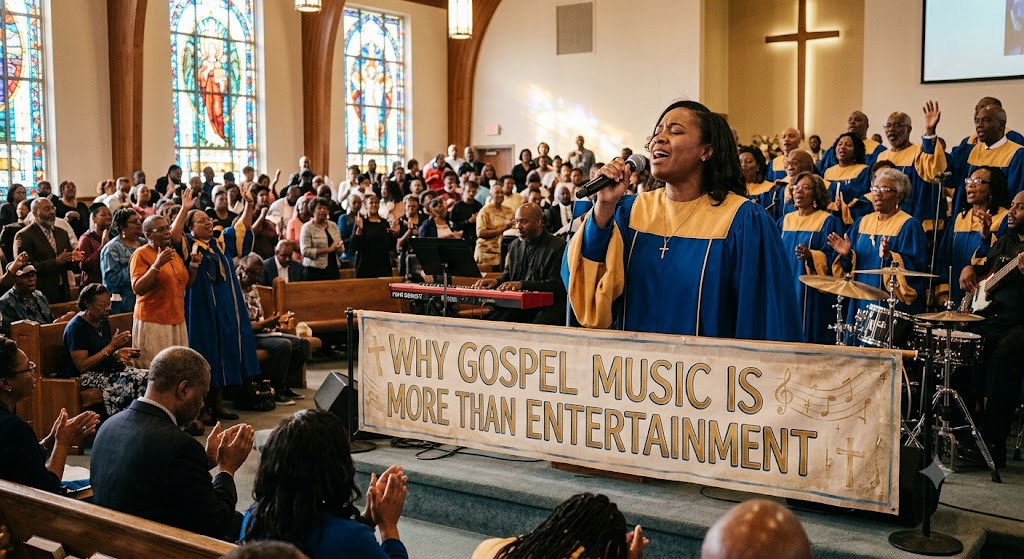
Why Gospel Music Is More Than Entertainment
When people think about music, they often think about enjoyment, relaxation, celebration, or passing the time. Music has become an inseparable part of daily life, accompanying people on their way to work, during exercise, while studying, and even before going to sleep. Yet there is a category of music that carries a purpose far beyond amusement or emotional stimulation. That is gospel music. Understanding why gospel music is more than entertainment opens the door to appreciating its true value, not only as an art form but also as a powerful spiritual tool that has transformed countless lives across generations.
Why Gospel Music Is More Than Entertainment is a question worth exploring because many people approach gospel songs with the same expectations they have for secular music. They judge them by catchy melodies, vocal ability, production quality, or chart performance. While these elements certainly contribute to making great music, they do not define the heart of gospel music. At its core, gospel music exists to glorify God, proclaim the message of Jesus Christ, strengthen believers, encourage the discouraged, and point people towards eternal truth. Entertainment may be one result of listening to gospel music, but it is never meant to be its primary purpose.
From the earliest pages of Scripture, music has been closely connected to worship. Throughout the Bible, God’s people sang songs of praise after experiencing His faithfulness. Moses and the Israelites sang after crossing the Red Sea. David wrote numerous psalms celebrating God’s greatness, mercy, justice, and love. The Levites were appointed to lead worship in the temple, demonstrating that music was an essential part of Israel’s relationship with God. These examples reveal that music has always served as a vehicle for worship rather than mere amusement.
When believers gather to worship today, songs continue to unite hearts in praising God. Gospel music creates an atmosphere where people become more conscious of God’s presence. While no melody can force God to move, sincere worship prepares hearts to receive His Word and respond to His Spirit. This alone explains why gospel music is more than entertainment. It becomes an expression of love, gratitude, surrender, and faith.
One remarkable characteristic of gospel music is its ability to communicate biblical truth in a memorable way. Many Christians can recall lyrics from worship songs more easily than lengthy passages of Scripture because melodies help reinforce memory. Songs based on God’s Word become daily reminders of His promises. During difficult moments, believers often remember a familiar chorus that strengthens their faith even when they cannot immediately recall a specific Bible verse. In this way, gospel music serves as an instrument for teaching and spiritual growth.
The emotional impact of gospel music should never be underestimated, yet it must also be properly understood. Some critics argue that gospel music merely manipulates emotions, but genuine gospel songs go much deeper than emotional excitement. They address the human heart while pointing listeners towards lasting hope in Christ. Emotions naturally respond when people encounter truth, but the truth itself remains the foundation. A moving melody without biblical substance may entertain, but gospel music seeks to transform lives by combining meaningful lyrics with heartfelt worship.
Throughout history, gospel music has comforted people during seasons of grief, persecution, sickness, financial hardship, and uncertainty. Countless believers have testified that worship songs became a source of strength when words failed them. Hospitals, prison cells, refugee camps, and homes around the world have witnessed the healing power of hope-filled songs centred on God. Although music cannot replace medical treatment or solve every earthly problem, it often renews courage, restores peace, and reminds people that God remains faithful even in life’s darkest valleys.
Why Gospel Music Is More Than Entertainment also becomes clear when considering its role in evangelism. Long before many people opened a Bible or attended church, they first encountered the message of Jesus through a gospel song. Music crosses cultural, linguistic, and geographical barriers with remarkable effectiveness. A single song can communicate God’s love to someone who may never have listened to a sermon. This explains why missionaries, churches, and Christian ministries have consistently used music to spread the Gospel throughout the world.
One of the unique strengths of gospel music lies in its accessibility. Not everyone enjoys reading lengthy books or theological articles, but almost everyone responds to music in some way. Songs have the ability to enter places where speeches cannot. They remain in people’s minds for years, sometimes resurfacing during moments of crisis when spiritual truth is most needed. Many individuals who drifted away from God have shared stories of hearing an old hymn or worship song that stirred memories of childhood faith and inspired them to return to Christ.
Gospel music also strengthens Christian unity. Believers from different cultures, denominations, languages, and backgrounds often discover common ground through worship. Whether in a small village church or a large international conference, people lift their voices together in praise of the same Saviour. This shared experience reminds Christians that they belong to one body united by faith in Jesus Christ rather than divided by nationality or tradition.
The growth of gospel music across Africa, Europe, Asia, North America, South America, and many other regions demonstrates its universal appeal. Different cultures bring unique musical styles, instruments, and rhythms while maintaining the central message of the Gospel. This diversity reflects the beauty of God’s creation and the worldwide nature of Christianity. The sound may differ from one country to another, but the message of redemption remains unchanged.
Another reason why gospel music is more than entertainment is because it often serves as a testimony. Many gospel artists write songs inspired by personal experiences of God’s faithfulness. These testimonies encourage listeners facing similar challenges. A song about overcoming fear, receiving healing, finding forgiveness, or experiencing restoration becomes more than artistic expression. It becomes evidence that God continues to work in people’s lives today.
The responsibility carried by Christian musicians is therefore significant. Unlike entertainers whose primary objective may be applause or commercial success, gospel artists carry the privilege of representing Christ through their music. Their lyrics, conduct, and ministry influence thousands or even millions of listeners. This is why integrity matters just as much as musical talent. Powerful voices and exceptional production cannot compensate for a message that lacks biblical truth or a lifestyle that contradicts the Gospel.
Modern technology has dramatically expanded the reach of gospel music. Streaming platforms, social media, podcasts, online radio stations, and video-sharing websites allow worship songs to reach audiences that previous generations could never have imagined. Someone sitting alone in a remote village can instantly access worship music from another continent. Churches livestream worship services, independent artists publish songs directly to listeners, and Christian music continues reaching new generations through digital platforms.
Despite these technological advances, the purpose of gospel music remains unchanged. It exists to honour God rather than simply gain views, likes, streams, or awards. While recognition can encourage artists and expand ministry opportunities, success should never replace faithfulness. The most powerful gospel song is not necessarily the one topping charts but the one faithfully pointing hearts towards Jesus Christ.
The commercialisation of Christian music presents both opportunities and challenges. Professional recording, excellent production, marketing, and distribution enable gospel music to compete with mainstream music in quality and accessibility. However, there is also the danger of allowing financial gain or popularity to overshadow ministry. This is why churches, artists, and listeners must continually evaluate whether the focus remains on glorifying God rather than promoting personalities.
Why Gospel Music Is More Than Entertainment becomes even clearer during personal devotion. Many believers begin or end their day with worship songs that prepare their hearts for prayer and Bible study. Music creates space for reflection, thanksgiving, confession, and adoration. While silence also has an important place in spiritual life, worship songs often help believers express emotions that ordinary conversation cannot fully capture.
Children also experience the unique influence of gospel music from an early age. Simple songs teach biblical truths, encourage prayer, and introduce young minds to God’s love. Many adults still remember songs they learned during childhood because music leaves lasting impressions. These early experiences frequently become foundations for lifelong faith.
Families benefit as well when gospel music becomes part of everyday life. Listening to worship songs together during meals, travel, or family devotions creates opportunities for meaningful conversations about God. Children observe parents singing sincerely, and these moments quietly shape spiritual values within the home. In this way, gospel music strengthens not only individuals but entire households.
Church worship is another area where gospel music demonstrates its deeper purpose. Congregational singing allows believers to actively participate in worship rather than simply observe. Every voice, whether professionally trained or not, joins together in praising God. This collective expression of faith reminds Christians that worship belongs to the entire church, not only to musicians standing on a platform.
Many people have experienced remarkable moments during worship when burdens seemed lighter, hope returned, forgiveness was embraced, or peace replaced anxiety. While experiences should always be tested against Scripture, these testimonies illustrate how God often works through worship to encourage His people. Gospel music becomes a channel through which believers focus their attention on God’s character instead of their circumstances.
Another powerful aspect of gospel music is its ability to encourage perseverance. Life inevitably includes disappointment, suffering, unanswered questions, and painful seasons. During such times, uplifting worship songs remind believers of God’s promises even when feelings suggest otherwise. Songs centred on God’s faithfulness help replace fear with confidence and despair with hope. This continual reinforcement of biblical truth equips Christians to endure life’s challenges with renewed strength.
The influence of gospel music extends beyond church buildings into workplaces, schools, hospitals, prisons, and communities. It reaches people who might never voluntarily attend a church service. Public concerts, community outreaches, radio broadcasts, and digital platforms provide opportunities for listeners to encounter messages of grace, forgiveness, redemption, and eternal hope. Many lives have been changed simply because someone heard a song that revealed God’s love in a deeply personal way.
The future of gospel music appears brighter than ever as new generations embrace creativity while remaining rooted in biblical truth. Young Christian musicians continue exploring fresh sounds without abandoning the timeless message of salvation through Jesus Christ. Innovation in style does not require compromise in doctrine. In fact, creativity can become another means of communicating the unchanging Gospel to a constantly changing world.
Why Gospel Music Is More Than Entertainment
Every listener also carries responsibility. Rather than consuming gospel music merely as background noise, believers should intentionally engage with the lyrics, meditate on the biblical truths being sung, and allow those truths to shape daily living. Worship does not end when the music stops. Genuine worship continues through obedience, love, service, forgiveness, humility, generosity, and faithful devotion to God.
Ultimately, why gospel music is more than entertainment can be answered in one simple yet profound truth. Gospel music exists because the Gospel itself changes lives. Entertainment may temporarily capture attention, but only the message of Jesus Christ transforms hearts. A beautiful melody may move emotions for a few minutes, yet the truth of God’s Word continues producing fruit for eternity. Gospel music combines these realities by using melody, harmony, rhythm, and lyrics to proclaim the greatest message ever given to humanity.
As believers continue singing about God’s mercy, grace, holiness, faithfulness, and salvation, gospel music will remain far more than a musical genre. It will continue serving as worship, ministry, encouragement, discipleship, evangelism, testimony, and proclamation. It will inspire the weary, comfort the brokenhearted, strengthen the faithful, challenge the complacent, and invite sinners to experience the saving grace of Jesus Christ. That is why gospel music is more than entertainment. It carries eternal significance because its ultimate purpose is not to impress the world but to glorify God, strengthen His people, and faithfully proclaim the Good News that continues transforming lives across every nation, language, culture, and generation.

Leave a Reply