
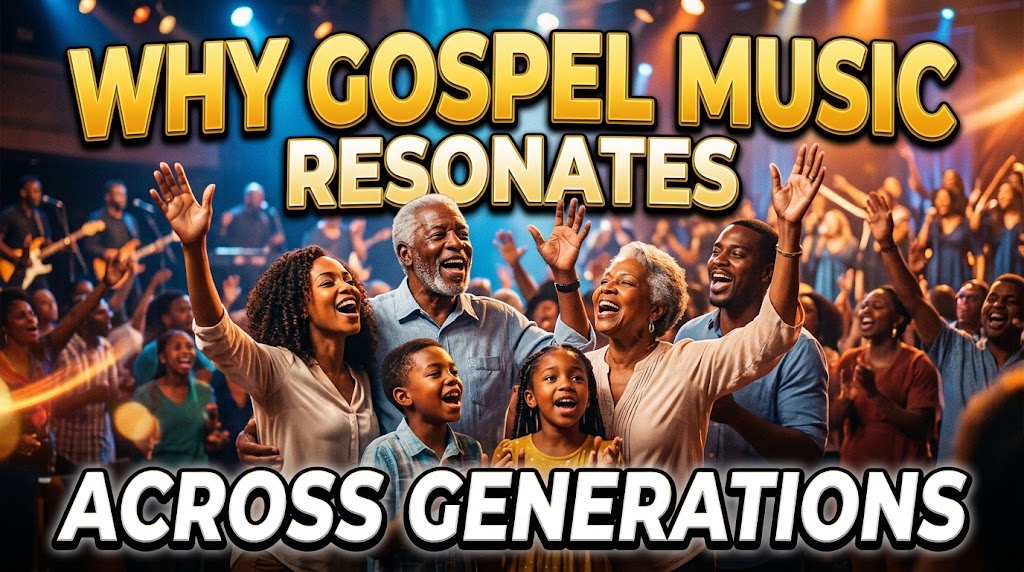
Why Gospel Music Resonates Across Generations
Why Gospel Music Resonates Across Generations
Why Gospel Music Resonates Across Generations is a question that becomes more interesting when we look at how Christian songs continue to connect grandparents, parents, young adults, teenagers and children despite the enormous changes in culture, technology and musical taste. Music trends come and go, production styles change, and new artists appear every year, yet gospel music continues to occupy a special place in the hearts of millions of listeners. From traditional hymns and powerful choir arrangements to contemporary worship, Afro Gospel and modern Christian music, gospel music has repeatedly demonstrated an ability to cross age groups and cultural boundaries.
One of the biggest reasons why gospel music resonates across generations is its focus on messages that remain relevant regardless of age. Human beings experience joy, disappointment, fear, hope, loss, gratitude, love, uncertainty and the desire for meaning at every stage of life. Gospel music speaks directly to many of these experiences. A teenager facing uncertainty about the future can connect with a song about trusting God. A parent dealing with family responsibilities can find encouragement in a song about God’s faithfulness. An older person reflecting on decades of life can hear a familiar hymn and immediately remember moments from the past. Although the circumstances may differ, the emotional and spiritual needs behind them can be remarkably similar.
Gospel music also resonates across generations because its central themes are not restricted to a particular period. Songs about faith, grace, forgiveness, hope, salvation, love, perseverance and God’s faithfulness can remain meaningful for decades. Musical arrangements may change, but the underlying message can continue to speak to people. This gives gospel music an unusual ability to survive changes in popular culture. A song may have been recorded many years ago, yet its message can still feel relevant when someone discovers it for the first time.
Another important factor is the emotional power of gospel music. People do not always listen to gospel music simply to hear impressive vocals or sophisticated production. Many listeners turn to Christian music because they want encouragement, comfort, reflection or a reminder of their faith. This emotional connection can make a song much more memorable. When a person associates a particular song with a significant period in life, hearing that song years later can bring back powerful memories.
This explains why an older gospel song can suddenly become meaningful to a younger listener. The young listener may not have experienced the historical period in which the song was released, but they can still understand its emotional message. A song about overcoming hardship does not require someone to have lived through the same decade as the songwriter. A song about God’s goodness does not become irrelevant because musical technology has changed. The human emotions behind the message remain recognisable.
Family influence also plays an important role in explaining why gospel music resonates across generations. Many people are introduced to Christian music by their parents, grandparents, relatives or church communities. A child may grow up hearing a particular worship song at home, during family prayers, in church services or at Christian gatherings. Over time, that music becomes part of the person’s memories. Even when the child grows older and develops a different musical taste, certain gospel songs can remain connected to their childhood.
This creates an interesting musical inheritance. Parents pass songs to their children, children discover new Christian artists, and eventually younger generations introduce their parents to new forms of gospel music. The exchange can move in both directions. A parent may introduce a child to traditional gospel music, while the child may introduce the parent to contemporary Christian music or Afro Gospel. This continuous exchange helps gospel music remain alive rather than becoming trapped in one generation.
Church worship is another major reason gospel music crosses generations. Churches bring together people of different ages in the same environment. During worship, the congregation may sing songs that have existed for decades alongside newer songs written by contemporary Christian artists. The experience allows different generations to participate in the same musical tradition.
For older Christians, familiar songs can provide a sense of continuity. For younger Christians, newer worship songs can provide a contemporary expression of their faith. When these musical traditions exist together, gospel music becomes a bridge between generations rather than a dividing line. It allows people with different musical preferences to participate in a shared spiritual experience.
The simplicity of many gospel messages also contributes to their longevity. A song does not necessarily need complicated lyrics to make a lasting impression. Sometimes a simple declaration of faith, gratitude or hope can be more powerful because listeners can easily remember it and sing along. Repetition can reinforce the message and make songs easier for congregations to learn.
This is particularly important in church settings where music is not only performed but participated in. Gospel music often invites people to sing, clap, respond, reflect and worship. The listener can become part of the music. That participatory nature creates a different relationship between the audience and the song. Instead of simply consuming music, people can experience it collectively.
The growth of digital platforms has also created new opportunities for gospel music to reach younger generations. Streaming services, social media platforms and video sharing websites have made it easier for listeners to discover Christian songs from different decades and countries. A teenager with a smartphone can encounter a gospel song recorded decades ago within minutes. At the same time, an older listener can discover a contemporary gospel artist without necessarily needing to attend a concert or purchase a physical album.
This digital accessibility has changed how musical discovery happens. In the past, discovering a song often depended on radio stations, television programmes, physical albums, church gatherings or recommendations from friends and family. Today, algorithms, playlists, short videos and online communities can introduce listeners to music from almost anywhere.
This has particularly benefited gospel music because the genre contains an enormous catalogue of songs. A listener can move from traditional hymns to choir gospel, contemporary worship, Afro Gospel, Christian hip hop, Christian R&B and other forms of faith based music within the same listening session. The boundaries between generations can therefore become less important because digital platforms allow people to explore music based on message, mood and personal interest.
Afro Gospel provides another powerful example of how gospel music can evolve while maintaining its spiritual foundation. African Christian artists have increasingly incorporated contemporary African rhythms, languages, vocal styles and production techniques into gospel music. This gives younger listeners a sound that may feel familiar while maintaining Christian themes.
The growth of Afro Gospel also demonstrates that gospel music does not have to remain musically static in order to preserve its identity. New sounds can introduce Christian messages to audiences who might not immediately connect with traditional arrangements. At the same time, older listeners can discover elements of familiar Christian themes within newer musical styles.
Lyrics are perhaps the most important part of the explanation. Gospel music often tells stories. These stories may involve struggle, redemption, gratitude, prayer, disappointment, restoration or hope. Storytelling gives listeners something with which they can identify. A person may hear a song about surviving a difficult season and remember their own experience. Another listener may hear the same song and think about a loved one.
This ability to attach personal meaning to music is one of the reasons why gospel songs can remain relevant for years. The songwriter may have written the song based on one specific experience, but listeners can interpret its message through their own lives. A song therefore becomes bigger than the original circumstances that inspired it.
Gospel music also resonates across generations because it often provides language for emotions that people struggle to express themselves. There are moments when someone knows they are grateful but cannot find the right words. There are moments when a person feels overwhelmed and needs encouragement. There are moments when someone wants to pray but does not know what to say. A gospel song can provide words for those emotions.
This is one reason people often create personal playlists for particular seasons of life. Someone may have songs for prayer, songs for morning devotion, songs for difficult days, songs for celebrations and songs for moments of reflection. As life changes, the meaning of those songs can change as well.
Nostalgia is another powerful force. Music is strongly connected to memory, and gospel music is often connected to significant spiritual and family experiences. A song heard during childhood may remind someone of their parents. A worship song may remind someone of a church they attended years ago. A gospel recording may bring back memories of a wedding, funeral, birthday, conference or other important event.
These memories help explain why people sometimes return to songs they have not heard for many years. They are not necessarily returning only for the melody. They are returning to a moment, a relationship or an important chapter of their lives.
Gospel music also benefits from the contribution of multiple generations of artists. Established musicians bring experience and musical traditions, while younger artists introduce fresh sounds, technologies and perspectives. When these groups collaborate, gospel music can become a meeting point between the past and the present.
Collaborations between generations can introduce older audiences to new sounds while giving younger audiences an opportunity to appreciate established musical traditions. This process helps prevent Christian music from becoming disconnected from either its history or its future.
Another reason why gospel music resonates across generations is its ability to adapt to different environments. Gospel music can be heard in churches, homes, cars, concerts, Christian conferences, personal devotion sessions and online communities. It can be performed by a solo vocalist, choir, worship team, acoustic musician or full production band. This flexibility allows the music to fit different lifestyles and generations.
The global nature of Christianity has also expanded the reach of gospel music. A Christian song created in Nigeria can reach listeners in Ghana, Kenya, the United Kingdom, the United States or other parts of the world. Likewise, Christian music from other countries can influence Nigerian listeners. Digital distribution has accelerated this exchange and created a global Christian music ecosystem.
This international connection means that gospel music is no longer limited by geographical boundaries. A listener may enjoy the theology of one artist, the vocal style of another and the rhythm of a third artist from an entirely different country. The result is a constantly evolving Christian music culture.
The continued relevance of gospel music does not mean that every generation prefers the same sound. In fact, different generations often have very different musical preferences. What remains consistent is the ability of gospel music to communicate meaningful ideas through whatever musical language a particular generation understands.
Older listeners may prefer hymns, choirs and traditional gospel arrangements. Younger listeners may prefer contemporary worship, Afro Gospel, Christian hip hop or modern production. These preferences do not necessarily mean that one generation has abandoned gospel music. They may simply demonstrate that the same faith can be expressed through different musical forms.
This distinction is important when discussing the future of Christian music. The goal is not necessarily to force every generation to listen to the same songs. Instead, the strength of gospel music lies partly in its ability to create different expressions while preserving themes that matter to believers.
Gospel music also creates opportunities for conversation between generations. A grandparent can explain why a particular hymn was important during their younger years. A parent can share the story behind a favourite worship song. A young person can introduce an older relative to a contemporary gospel artist. These conversations turn music into a tool for sharing experiences and building relationships.
The digital age has made this process even more interesting. A song can move from a church choir to a streaming platform, from a streaming platform to social media, and from social media into the playlist of someone living thousands of kilometres away. A song created for one audience can eventually find listeners that the original artist never imagined.
For Christian music bloggers, this generational connection creates numerous opportunities to explore the stories behind songs and artists. Readers are interested not only in what a song sounds like but also in why it matters, where it came from, who created it and how people are responding to it. Articles about gospel music can therefore explore music history, artist journeys, songwriting, worship culture, streaming trends and the personal stories connected to Christian songs.
The question of Why Gospel Music Resonates Across Generations ultimately leads back to something simple. People change, technology changes and musical styles change, but fundamental human experiences remain. People still experience hope and disappointment. They still search for meaning. They still celebrate important moments. They still need encouragement. They still remember the people and experiences that shaped them.
Gospel music gives many of those experiences a voice. It combines melody with messages of faith and turns personal and collective experiences into something people can sing. That combination gives Christian music a remarkable ability to travel through time.
A song released decades ago can still speak to someone hearing it for the first time today. A new gospel artist can create music that introduces ancient Christian themes to a modern audience. A family can share songs across generations. A church can combine traditional and contemporary worship. A listener can discover music from another country and find that its message feels surprisingly familiar.
That is why the conversation about Why Gospel Music Resonates Across Generations is not simply a conversation about musical preference. It is a conversation about memory, faith, emotion, family, culture, storytelling and the human desire to find words for life’s most important experiences.
Gospel music continues to evolve, but its ability to communicate hope, faith and spiritual reflection gives it a foundation that can survive musical trends. As new artists experiment with new sounds and new technologies, the genre can continue reaching younger audiences without necessarily abandoning the traditions that shaped it.
Perhaps the greatest strength of gospel music is that it does not belong exclusively to one generation. It can belong to the grandmother singing a familiar hymn, the father playing an old gospel record, the young adult discovering a worship artist through streaming, the teenager sharing a Christian song online and the child learning their first worship chorus at church.
Different generations may sing different songs, but they can still find common ground in the message behind the music. And as long as people continue searching for hope, expressing gratitude, facing difficult seasons and celebrating their faith, gospel music will have something meaningful to say.
Why Gospel Music Resonates Across Generations is therefore ultimately a story of continuity and renewal. The sound can change, the instruments can change, the platforms can change and the artists can change, but the emotional connection created when music speaks directly to the human heart can remain remarkably powerful. That is what gives gospel music its enduring place in Christian culture and helps ensure that its songs continue travelling from one generation to the next.

Leave a Reply