
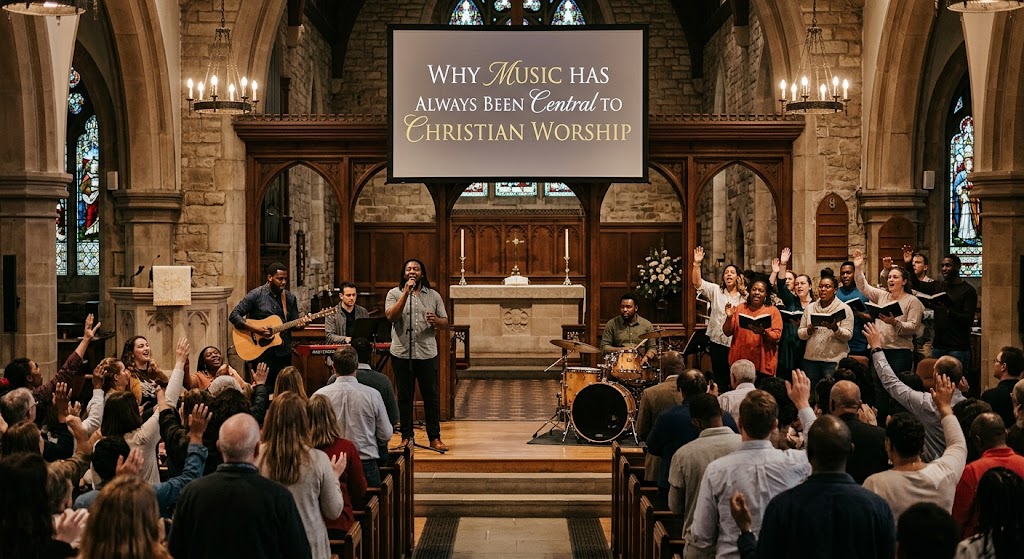
Why Music Has Always Been Central to Christian Worship
Music has always been central to Christian worship, and this truth has remained unchanged from the earliest pages of Scripture to the present day. Across generations, cultures, languages, and denominations, believers have consistently used music as one of the most meaningful expressions of faith, gratitude, praise, repentance, hope, and love for God. While styles of worship music have evolved over time, the purpose behind it has remained remarkably consistent. Christians sing because they believe God is worthy of praise, because music helps communicate truths that ordinary speech often cannot, and because worship through song unites believers in a shared declaration of faith. Understanding why music has always been central to Christian worship allows us to appreciate not only the beauty of sacred music but also its enduring spiritual significance.
From the very beginning of the Bible, music appears as a natural response to God’s power and faithfulness. One of the earliest recorded songs is found after the Israelites crossed the Red Sea and witnessed God’s miraculous deliverance from Egypt. Moses and the people of Israel sang together in celebration, acknowledging that their victory came not through their own strength but through the mighty hand of God. This moment established an important pattern that would continue throughout biblical history. Whenever God’s people experienced His goodness, protection, provision, or mercy, music became an appropriate and joyful response. Music was not treated as entertainment or background sound. It was an act of worship that gave glory to the One who deserved all honour.
Throughout the Old Testament, the importance of music continued to grow. King David, often remembered as both a shepherd and a king, also played a remarkable role as a musician and songwriter. Many of the Psalms attributed to David were written to be sung rather than merely read. These songs express every human emotion imaginable. There are songs of celebration, sorrow, repentance, thanksgiving, confidence, longing, and hope. This remarkable collection demonstrates that music has always been central to Christian worship because it allows believers to bring their entire hearts before God without pretending that life is always easy or uncomplicated. Worship through music embraces both moments of triumph and seasons of struggle.
The book of Psalms remains one of the greatest examples of why music has always been central to Christian worship. For centuries, these inspired songs have helped believers express thoughts and emotions that might otherwise remain difficult to articulate. They teach profound theological truths while also providing deeply personal prayers. The combination of doctrine and devotion makes the Psalms timeless. Whether someone is celebrating answered prayer or seeking comfort during suffering, these songs continue to offer words that connect the human heart with the presence of God.
Music also played a significant role in Israel’s temple worship. Skilled musicians were appointed specifically for the ministry of praise. Instruments such as harps, lyres, cymbals, trumpets, and other musical instruments accompanied worship services, creating an atmosphere that reflected reverence and celebration. This organised approach demonstrates that music was considered an essential ministry rather than an optional addition. Those entrusted with musical responsibilities prepared diligently because they understood that their service honoured God and encouraged the congregation to worship wholeheartedly.
When examining the life of Jesus, we also find evidence that music remained an important part of worship. During the Last Supper, before Jesus and His disciples went to the Mount of Olives, they sang a hymn together. This simple yet profound detail reminds believers that singing was part of the spiritual life shared by Christ Himself. Even on the night before His crucifixion, Jesus participated in worship through song. That moment speaks volumes about the enduring place of music within Christian faith and practice.
The early church continued this rich tradition. As Christianity spread throughout the Roman Empire, believers gathered not only to pray and study Scripture but also to sing together. Their songs reinforced biblical teaching, strengthened fellowship, encouraged perseverance during persecution, and reminded Christians of the hope they possessed in Christ. Many early believers faced imprisonment, rejection, and even death because of their faith, yet music remained central to their gatherings. Songs became declarations of confidence that earthly suffering could never separate them from the love of God.
The New Testament encourages Christians to sing psalms, hymns, and spiritual songs. This instruction reflects the diversity of worship music even within the earliest church. Different musical forms served different purposes while all directing attention toward God. Some songs focused on praise, others on instruction, and others on thanksgiving. Together they created a balanced expression of worship that strengthened both individuals and congregations.
One reason why music has always been central to Christian worship is its remarkable ability to help believers remember truth. Long before printed Bibles became widely available, many Christians learned biblical teachings through songs. Melody and rhythm make words easier to remember. Even today, countless believers can recall verses of Scripture because they first learned them through music. Worship songs therefore serve as valuable teaching tools that reinforce sound doctrine while engaging both the mind and the heart.
Music also reaches emotional depths that ordinary conversation sometimes cannot access. There are moments when spoken words feel inadequate, especially during seasons of overwhelming joy, grief, gratitude, or repentance. Music provides a language for these experiences. A simple worship song can move a believer to tears, inspire renewed faith, or restore hope after disappointment. This emotional connection does not replace biblical truth but rather allows truth to penetrate more deeply into the human heart.
Another reason why music has always been central to Christian worship is that it creates unity among believers. Congregational singing brings together people from different ages, backgrounds, cultures, occupations, and life experiences. When hundreds or even thousands of voices join together in praise, personal differences become less significant than the shared focus on God. This visible expression of unity reflects the church as one body united under Christ.
Throughout church history, music has adapted to changing cultures without abandoning its central purpose. Ancient chants, traditional hymns, gospel music, contemporary worship songs, African praise music, choral arrangements, orchestral compositions, and modern acoustic worship have all found their place within Christian communities around the world. Although musical preferences often differ between generations and denominations, the desire to glorify God through music remains constant. This adaptability explains why Christian worship continues to thrive in every continent and culture.
Many of the world’s greatest composers dedicated their talents to creating music for worship. Their works have inspired countless believers while pointing audiences toward God’s greatness. At the same time, simple songs written by unknown church members have often impacted local congregations just as powerfully. The effectiveness of worship music has never depended solely on musical complexity or technical excellence. Instead, sincere hearts seeking to honour God have consistently produced songs that bless His people.
Christian worship music also serves as a testimony to those outside the faith. Throughout history, many individuals have first encountered the message of the Gospel through a song rather than a sermon. Lyrics rooted in Scripture communicate the character of God, the saving work of Jesus Christ, and the hope of eternal life in ways that invite reflection and curiosity. In many parts of the world where public preaching has been restricted, music has quietly continued spreading the message of Christ across communities and generations.
Another powerful aspect of why music has always been central to Christian worship is its ability to encourage believers during suffering. Many Christians can testify that worship songs have strengthened them during illness, financial hardship, grief, disappointment, or uncertainty. Singing about God’s faithfulness reminds worshippers that His character does not change even when circumstances do. Music becomes a source of spiritual resilience because it directs attention away from temporary struggles and towards eternal promises.
Corporate worship through music also reminds believers that Christianity is not merely an individual faith but a shared journey. Singing together creates opportunities for mutual encouragement. One person may arrive at church feeling spiritually exhausted, yet hearing others confidently proclaim God’s goodness can renew weakened faith. In this way, congregational worship becomes an expression of believers carrying one another’s burdens while collectively glorifying God.
Music has always been central to Christian worship because it reflects the creativity of the Creator Himself. Scripture presents God as the author of beauty, harmony, order, and creativity. Human beings, created in His image, naturally express these qualities through artistic gifts including music. When musicians dedicate their talents to honouring God, they reflect His creative nature while inviting others into deeper worship. This perspective transforms music from mere performance into an offering presented before the Lord.
The relationship between music and Scripture also deserves careful attention. Healthy Christian worship has always sought to ensure that songs accurately communicate biblical truth. Beautiful melodies alone cannot sustain faith if the lyrics fail to reflect God’s Word faithfully. Throughout history, the church has treasured songs that combine theological depth with heartfelt devotion. Such songs continue shaping believers’ understanding of God while strengthening their confidence in biblical teaching.
Music frequently accompanies many significant moments within Christian life. Weddings, baptisms, communion services, Christmas celebrations, Easter gatherings, missionary commissioning services, prayer meetings, funerals, youth camps, revivals, and daily personal devotion all include music as an important expression of worship. These occasions demonstrate that worship through song extends far beyond Sunday services. Music becomes woven into the spiritual milestones that define the Christian journey.
The global nature of Christianity further highlights why music has always been central to Christian worship. Believers from Africa, Europe, Asia, North America, South America, Australia, and countless island nations all express their faith through music shaped by their own cultural traditions. Instruments, rhythms, languages, and melodies may differ dramatically, yet the central purpose remains identical. Every culture contributes unique expressions of praise while proclaiming the same Gospel message centred on Jesus Christ.
Technology has significantly expanded the reach of Christian worship music. Today, believers can access worship songs through streaming services, online radio, social media, podcasts, mobile applications, and digital platforms. Churches broadcast worship services to global audiences, allowing songs written in one country to encourage believers thousands of miles away. This unprecedented accessibility has introduced millions of people to Christian music while strengthening international fellowship among believers.
Despite technological advances, the heart of worship remains unchanged. Music has always been central to Christian worship not because of production quality, famous artists, or sophisticated equipment, but because worship ultimately concerns the relationship between God and His people. Whether accompanied by a full orchestra, a small acoustic guitar, a village drum, a church organ, or simply unaccompanied voices, sincere worship offered in spirit and truth remains precious before God.
Why Music Has Always Been Central to Christian Worship
Parents have long recognised the value of teaching children biblical truths through songs. Many Christians remember learning about God’s love, the life of Jesus, or important Bible stories through simple melodies during childhood. These songs often remain in memory for decades, continuing to encourage faith well into adulthood. This lasting influence demonstrates once again why music has always been central to Christian worship and spiritual formation.
Christian missionaries have likewise understood the power of music when sharing the Gospel. Rather than replacing local musical traditions, many missionaries have translated biblical truths into indigenous languages and musical styles. This approach allows new believers to worship God using familiar cultural expressions while remaining faithful to biblical teaching. The result is a vibrant diversity within the global church that celebrates both unity in Christ and cultural uniqueness.
Music also cultivates humility. Genuine worship shifts attention away from personal achievement and redirects it towards God’s greatness. While musicians may develop impressive skills through years of practice, Christian worship reminds every participant that their gifts ultimately belong to God. The goal is never personal recognition but faithful service. When this attitude guides worship, music fulfils its highest purpose as an act of joyful obedience.
The enduring power of Christian music can also be seen in its influence beyond church buildings. Worship songs accompany believers during daily commutes, family gatherings, quiet moments of reflection, hospital visits, mission trips, workplaces, and times of personal prayer. Music helps transform ordinary moments into opportunities for remembering God’s presence. In this way, worship extends beyond scheduled services and becomes woven into everyday life.
As each generation contributes new songs to the church, believers continue standing upon the foundation established by those who worshipped before them. Ancient hymns and newly written worship songs together testify that God’s faithfulness has never changed. Different musical expressions enrich the church while preserving the same eternal message of salvation through Jesus Christ. This continuity across centuries powerfully illustrates why music has always been central to Christian worship.
Ultimately, the greatest reason music has always been central to Christian worship is because worship itself is centred on God rather than human preference. Music enables believers to proclaim His holiness, celebrate His grace, remember His promises, express gratitude for His salvation, and anticipate the eternal worship described in Scripture where people from every nation, tribe, language, and people will praise Him together. Earthly worship offers only a glimpse of that future reality, yet every sincere song points towards that glorious hope.
Why music has always been central to Christian worship is therefore not a question answered merely by history, tradition, or culture. It is answered by Scripture, by the life of Christ, by the witness of the early church, by the experience of believers throughout every century, and by the transforming work God continues to accomplish through songs of praise. Music strengthens faith, teaches truth, unites believers, comforts the hurting, proclaims the Gospel, nurtures discipleship, and glorifies God. For these reasons, music has always been central to Christian worship, and it will continue to occupy a cherished place in the lives of believers until the day when all creation joins together in perfect praise before the throne of God.

Leave a Reply