
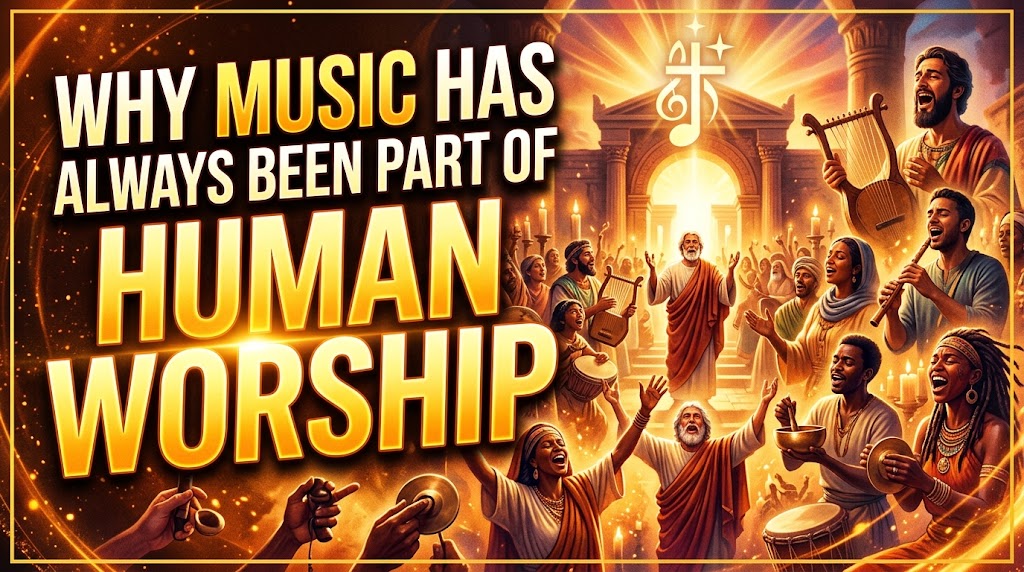
Why Music Has Always Been Part of Human Worship
Why Music Has Always Been Part of Human Worship
Why Music Has Always Been Part of Human Worship is a question that opens the door to one of the most fascinating connections between humanity, faith, emotion, and spirituality. Long before modern recording studios, streaming platforms, microphones, concert stages, and sophisticated musical instruments existed, human beings used their voices and simple instruments to express reverence, gratitude, sorrow, hope, celebration, and devotion. Across different cultures and generations, music has remained closely connected to worship, and Christianity is no exception. From the songs recorded in Scripture to the hymns sung in churches today, music has consistently provided believers with a powerful way to express what words alone sometimes struggle to communicate.
The reason why music has always been part of human worship is connected to the unique ability of music to combine words, emotion, memory, rhythm, and communal participation. A spoken statement can communicate an idea, but a song can allow people to experience that idea emotionally and remember it long after they have heard it. When people sing about faith, hope, love, forgiveness, grace, salvation, or the greatness of God, they are not simply repeating words. They are giving those words melody, emotion, rhythm, and personal meaning. This combination makes music one of the most enduring forms of spiritual expression.
Throughout biblical history, music played an important role in the relationship between God’s people and worship. The Book of Psalms contains hundreds of songs, prayers, praises, cries for help, expressions of gratitude, and declarations of faith. These writings demonstrate that worship was never limited to silent reflection or spoken prayers. People sang about God’s character, His faithfulness, His power, His mercy, His protection, and His promises. The Psalms reveal a remarkable range of human emotions, showing that worship music can express joy as well as sadness, confidence as well as uncertainty, celebration as well as desperation.
This is one important reason why music remains such a powerful part of Christian worship today. Human beings experience different seasons of life, and music gives them a language for those seasons. Someone celebrating a major breakthrough may sing with excitement and gratitude. Someone going through disappointment may find comfort in a worship song about God’s faithfulness. Someone struggling with fear may sing about courage and trust. Someone experiencing loss may find words of comfort in a hymn or gospel song. Music provides an avenue through which people can bring their real emotions into their relationship with God.
The question of why music has always been part of human worship also becomes clearer when we consider the role of memory. People often remember songs more easily than ordinary conversations. A melody can cause a person to remember a particular place, season, person, event, or experience many years later. This makes music particularly effective for preserving messages of faith. A child who learns a Christian song may forget exactly when the song was first taught, but years later may still remember the words and melody. In this way, music can carry spiritual messages from one generation to another.
Christianity has benefited greatly from this relationship between music and memory. Hymns, gospel songs, worship songs, spiritual songs, and contemporary Christian music have helped preserve important themes of Christian faith across generations. Songs can teach believers about God’s character, remind them of biblical promises, encourage prayer, and reinforce important truths about salvation. A song may become part of someone’s daily life because the melody makes its message easy to remember and repeat.
Another important reason why music has always been part of human worship is that music creates participation. A sermon can be listened to by a congregation, but a worship song invites the congregation to participate. Instead of simply hearing someone talk about faith, people can use their own voices to express faith. This creates a different kind of experience. Hundreds or thousands of people can sing the same words at the same time, creating a sense of unity that is difficult to reproduce through ordinary conversation.
This collective nature of music is particularly significant in Christian worship. When an entire congregation sings together, differences in age, background, profession, financial status, education, and social position can temporarily become less important. Everyone contributes a voice to the same song. The worship experience becomes collective rather than individual. People are reminded that they are part of something larger than themselves.
Music also gives worship a sense of movement and rhythm. Human beings naturally respond to rhythm, whether through clapping, tapping, dancing, marching, or simply moving along with a melody. Different cultures have developed different musical expressions, but the human response to rhythm is remarkably widespread. This helps explain why music appears in religious ceremonies and spiritual practices across many societies. Music can organise collective participation and help people focus their attention on a shared purpose.
In Christian worship, this can be seen through different musical traditions. Some churches use traditional hymns accompanied by organs or pianos. Others use choirs, drums, guitars, keyboards, orchestras, or contemporary worship bands. Some Christian communities emphasise quiet and reflective worship, while others celebrate through energetic singing, clapping, and dancing. The musical styles may differ significantly, but the underlying purpose can remain similar. Music provides a means of expressing devotion and directing attention towards God.
The development of gospel music provides another powerful example. Gospel music has historically combined Christian messages with the emotional realities of everyday life. Themes of struggle, hope, deliverance, perseverance, gratitude, and faith have appeared repeatedly in gospel songs. For many listeners, gospel music does more than provide entertainment. It becomes a reminder that difficult circumstances do not necessarily have the final word.
This is especially evident in African gospel music, where worship is often expressed through powerful vocals, rhythmic instrumentation, choirs, call and response, dancing, and energetic congregational participation. Across Africa, Christian music has developed into a broad and diverse musical culture that reflects local languages, traditions, instruments, rhythms, and contemporary influences. Yet beneath the musical diversity is a common desire to communicate faith through sound.
Music can also express emotions that ordinary language sometimes struggles to capture. There are moments when a person may not know exactly what to say during prayer. A worship song can provide words for that moment. A person may sing about God’s goodness when they are trying to remember reasons to remain grateful. They may sing about God’s presence when they feel alone. They may sing about hope when their circumstances seem discouraging.
This emotional dimension does not mean that music replaces prayer, Scripture, preaching, or other aspects of Christian worship. Rather, music can work alongside them. A worship song can prepare the heart for prayer. A hymn can reinforce a biblical teaching. A gospel song can remind someone of a testimony. A musical response after a sermon can give people an opportunity to reflect on the message they have heard.
Another reason why music has always been part of human worship is its ability to tell stories. Some of the most memorable Christian songs are built around stories of redemption, transformation, struggle, faith, and divine intervention. Storytelling through music can make abstract ideas more relatable. Instead of simply saying that God is faithful, a song may describe a journey through difficulty and explain how the singer experienced God’s faithfulness.
This storytelling tradition is not new. Biblical songs themselves often recount events and celebrate what God has done. Songs can preserve history while simultaneously turning that history into worship. When a community sings about what God has done in the past, it can strengthen confidence that God remains worthy of trust in the present.
Music can also create an atmosphere that encourages reflection. The combination of melody, harmony, rhythm, lyrics, and silence can influence how people experience a moment. A gentle worship song may encourage quiet reflection, while an energetic praise song may inspire celebration. The diversity of musical expression allows Christian worship to accommodate different emotional and spiritual moments.
However, the power of music does not mean every song automatically becomes meaningful worship. The message, intention, context, and heart behind the music matter. Christian music can be professionally produced, beautifully performed, and commercially successful while still raising questions about its purpose. Worship is ultimately about more than sound quality. It involves the direction of the heart and the object of devotion.
This distinction is important in an age where Christian music has become part of a large global entertainment industry. Modern gospel and Christian artists can reach millions of listeners through streaming services, social media, radio, television, and live events. Technology has made it possible for a Christian song recorded in one country to reach listeners on another continent almost instantly. This has created extraordinary opportunities for Christian music, but it has also created new conversations about the relationship between ministry, creativity, popularity, and commercial success.
Even with these changes, the fundamental reason why music has always been part of human worship remains remarkably consistent. People want to express what they believe and feel. They want to celebrate what they consider sacred. They want to remember important truths. They want to share their faith with others. They want to find language for emotions that are sometimes difficult to explain. Music provides a powerful way to accomplish all of these things.
Christian music has also become a source of encouragement outside formal church services. People listen to worship songs while travelling, working, exercising, studying, cooking, resting, or spending time alone. Some begin their mornings with worship music. Others listen during difficult moments. Some create playlists around specific themes such as prayer, gratitude, healing, encouragement, or spiritual reflection. In this way, music has expanded beyond the church building and become part of everyday Christian life.
The digital age has made this development even more significant. A believer no longer needs to wait for a particular church service or radio programme to hear a favourite worship song. Music can be accessed almost instantly through phones and computers. Christian artists can release music independently and reach audiences without necessarily depending on traditional record companies. Worship music can travel across borders faster than ever before.
This global accessibility has also increased musical diversity within Christianity. Listeners can discover worship music from Nigeria, Ghana, South Africa, the United Kingdom, the United States, Brazil, South Korea, Australia, and many other parts of the world. They can hear different languages, rhythms, instruments, vocal styles, and production techniques while encountering familiar themes of faith.
This diversity demonstrates that there is no single musical language capable of representing every Christian community. Music reflects culture, and culture influences how people express worship. What sounds unusual to one congregation may feel completely natural to another. Yet the emotional purpose of singing can remain remarkably similar.
Perhaps one of the most beautiful aspects of music in worship is that it allows people to participate regardless of their professional musical ability. Worship is not necessarily a competition for the best voice. A congregation does not need hundreds of professional singers to worship through music. Sometimes the most meaningful musical moments are created by ordinary people singing together with sincerity.
This is why the question “Why Music Has Always Been Part of Human Worship” cannot be answered simply by pointing to musical entertainment or cultural tradition. Music touches something deeper in human experience. It brings people together, communicates emotion, preserves memory, tells stories, reinforces ideas, and creates opportunities for collective expression.
For Christians, music can become a vehicle through which biblical truths are remembered and expressed. It can remind believers of God’s faithfulness during difficult seasons and provide a language for gratitude during joyful seasons. It can help communities celebrate together and mourn together. It can teach children, encourage adults, inspire worship leaders, support evangelism, and preserve the musical heritage of previous generations.
The history of Christian music therefore reflects much more than changes in musical styles. It reflects changes in technology, culture, language, society, and the way different generations communicate their faith. From ancient songs and biblical psalms to hymns, traditional gospel, contemporary worship, Afro Gospel, Christian hip hop, and modern praise music, the sound may continue to change, but the desire to use music as an expression of faith remains.
Ultimately, why music has always been part of human worship comes down to the remarkable ability of music to unite the heart, mind, voice, memory, and community. Music allows people to say what they believe, remember what they have learned, celebrate what they value, and express emotions that ordinary speech may not fully capture. It can turn individual belief into collective expression and transform words into memorable experiences.
As Christian music continues to evolve, new generations will undoubtedly create new sounds, discover new instruments, experiment with new production techniques, and develop new ways of sharing songs with the world. Streaming platforms, social media, artificial intelligence, digital production, and global collaboration will continue to influence the Christian music landscape. Yet the fundamental human desire behind worship music is unlikely to disappear.
People will continue to sing because they have something they want to express. They will sing because they want to remember. They will sing because they want to celebrate. They will sing because they want to encourage others. They will sing because faith is not always something people want to keep silent about.
That is ultimately why music has always been part of human worship. Across centuries, cultures, languages, generations, and musical styles, people have continued to find in music a powerful way to express devotion. The instruments may change, the rhythms may change, the recording technology may change, and the platforms may change, but the human voice raised in worship remains one of the most enduring expressions of faith.

Leave a Reply