
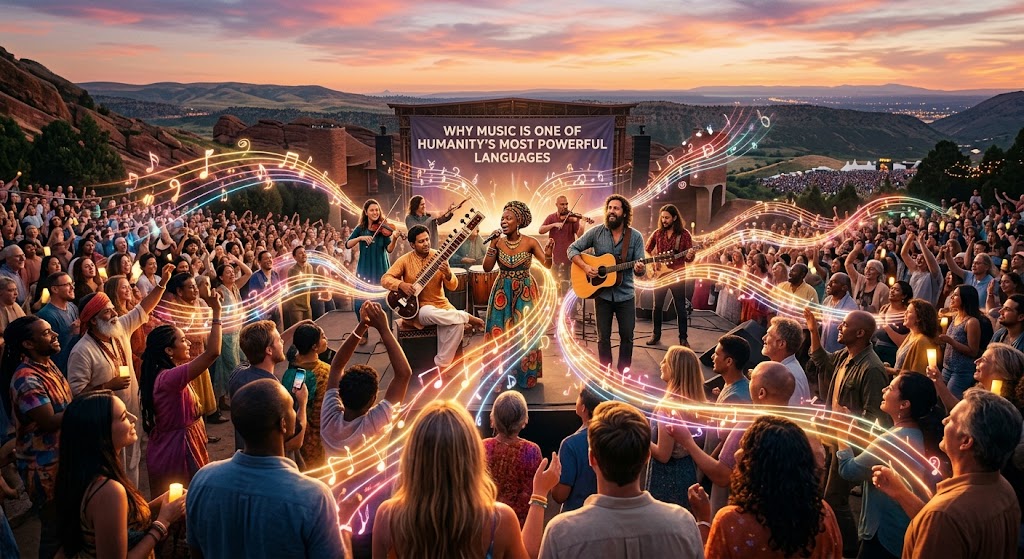
Why Music Is One of Humanity’s Most Powerful Languages
Why Music Is One of Humanity’s Most Powerful Languages
Music has accompanied humanity for thousands of years. Long before the development of modern technology, long before books became common, and even before many forms of written communication existed, people used rhythm, melody, and song to express themselves. Across continents, cultures, and generations, music has remained one of the few things that every society shares. This remarkable reality is one of the reasons why the question, “Why Music Is One of Humanity’s Most Powerful Languages,” continues to fascinate scholars, artists, psychologists, educators, and ordinary people alike.
Why Music Is One of Humanity’s Most Powerful Languages is not simply a philosophical question. It is a reflection of something deeply rooted in human existence. Music has the unique ability to communicate emotions, ideas, memories, and experiences in ways that spoken words often cannot. It can unite strangers, inspire movements, comfort the grieving, motivate athletes, strengthen faith, and preserve cultural traditions. In many ways, music speaks directly to the human heart.
One of the strongest reasons why music is considered one of humanity’s most powerful languages is its universality. Researchers studying societies around the world have found that music exists in every culture examined. Whether through lullabies, religious songs, dance music, healing ceremonies, or celebrations, music appears to be a universal feature of human life. Studies examining musical traditions across diverse societies have shown that music is present everywhere and serves important social and emotional functions.
Unlike spoken languages, which require learning specific words and grammatical structures, music can often be understood without translation. A person may not understand the lyrics of a song sung in a foreign language, yet they can still feel the joy, sadness, excitement, peace, or passion conveyed through the melody and rhythm. This ability to communicate emotion across cultural boundaries makes music exceptionally powerful. While different cultures may interpret certain musical elements differently, many emotional cues in music can still be recognised by listeners regardless of their background.
Music is also one of humanity’s most powerful languages because it reaches people emotionally. Human beings are emotional creatures. We experience happiness, sorrow, fear, love, hope, disappointment, excitement, and countless other feelings throughout our lives. Often, words struggle to capture the depth of these emotions. Music, however, can express them with astonishing effectiveness.
Think about moments when people celebrate major achievements. Music often accompanies weddings, graduations, birthdays, religious gatherings, and national events. Likewise, music is present during moments of grief and remembrance. Certain songs can instantly bring tears to the eyes, while others can fill a room with energy and excitement. Music possesses the rare ability to evoke emotional responses almost immediately, making it one of the most direct forms of human communication. Researchers have noted that music conveys feelings and identity in ways that are deeply connected to how the human brain processes emotion and social connection.
Another reason why music is one of humanity’s most powerful languages is its ability to create human connection. Throughout history, communities have used music to strengthen social bonds. People sing together in places of worship, dance together during celebrations, and perform music together during festivals and cultural events. These shared musical experiences help create a sense of belonging and unity.
Scientific research suggests that music plays an important role in social bonding. Group singing, collective performances, and shared musical experiences can strengthen relationships and encourage cooperation among individuals. Some researchers even argue that music evolved partly because it helped human communities build stronger social connections.
Music also serves as a powerful tool for storytelling. Before modern forms of media existed, many cultures passed down stories, traditions, and historical events through songs. Music allowed people to preserve important knowledge and share it with future generations. Even today, songs continue to tell stories about love, struggle, victory, faith, social issues, and personal experiences.
Storytelling through music is particularly effective because melodies help people remember information. A song can remain in someone’s memory for decades. This is why children often learn through songs and why many people can easily recall lyrics from songs they heard years ago. Music enhances memory by combining words, rhythm, and emotion into a single experience.
Why Music Is One of Humanity’s Most Powerful Languages can also be understood by examining its relationship with human development. From infancy, people respond to musical sounds. Babies may not understand spoken language, but they react to rhythm, melody, and vocal tones. Caregivers often sing lullabies to comfort infants, creating emotional bonds and supporting early development. Experts have observed that humans are naturally responsive to musical patterns from a very young age, suggesting that music plays a significant role in human growth and communication.
Furthermore, music has the extraordinary ability to transcend barriers. Differences in language, nationality, race, age, and social status often divide people. Music, however, frequently brings individuals together despite these differences. A song performed in one country can be appreciated by listeners thousands of miles away. International music festivals, global streaming platforms, and viral music trends demonstrate how easily music crosses cultural boundaries.
This global reach highlights why music remains one of humanity’s most powerful languages. While political systems, languages, and cultural practices may differ, music often provides common ground where people can connect and share experiences. It creates opportunities for understanding and empathy in a world that is increasingly interconnected.
Music also plays a significant role in personal identity. People often use music to express who they are, what they believe, and how they see the world. Favourite songs become part of personal memories. Certain genres reflect cultural backgrounds and social experiences. Music can help individuals feel understood, especially during challenging periods of life.
Many people associate specific songs with important moments. A wedding song may bring back memories of a special day. A worship song may remind someone of a powerful spiritual experience. A childhood song may evoke memories of family and home. These emotional connections demonstrate how deeply music becomes woven into individual lives.
The influence of music extends beyond personal experiences into education and learning. Educators frequently use music to help students remember information, improve concentration, and develop creativity. Musical training has been associated with cognitive benefits, including improved memory, attention, and problem solving skills. Because music engages multiple areas of the brain simultaneously, it provides a unique learning experience that differs from many other educational tools.
In healthcare settings, music has also demonstrated remarkable value. Music therapy is used to support patients dealing with neurological conditions, emotional challenges, and physical rehabilitation. There are documented cases where musical activities have assisted individuals recovering speech and motor abilities following serious injuries. Researchers continue to explore the ways music influences the brain and supports healing processes.
Another fascinating aspect of Why Music Is One of Humanity’s Most Powerful Languages is its flexibility. Spoken languages are often limited by vocabulary and grammar. Music, however, can communicate through countless combinations of rhythm, harmony, tempo, dynamics, and melody. The same piece of music may inspire different interpretations among listeners while still creating meaningful emotional experiences.
This flexibility allows music to remain relevant across generations. Musical styles evolve continuously, adapting to changing cultures and technologies. Yet despite these changes, the fundamental human response to music remains remarkably consistent. Ancient drums, classical orchestras, gospel choirs, jazz ensembles, rock bands, and digital producers all rely on the same underlying human capacity to create and respond to organised sound.
Faith communities provide another compelling example of music’s power. Across religions and spiritual traditions, music plays a central role in worship and devotion. Hymns, chants, praise songs, and sacred music help believers express gratitude, reverence, hope, and faith. In many cases, worship music creates a shared spiritual experience that strengthens community bonds and deepens personal reflection.
Music also inspires action. Throughout history, songs have supported social movements, encouraged courage during difficult times, and given people a voice during periods of struggle. Protest songs, national anthems, freedom songs, and inspirational music have all contributed to shaping societies. Music can motivate people not only emotionally but also socially and politically.
Technology has expanded the reach of music even further. Today, a musician can release a song online and reach listeners around the world within minutes. Streaming services, social media platforms, and digital distribution have transformed the way music is created, shared, and consumed. Yet despite these technological advances, the essential purpose of music remains unchanged. People continue to use music to communicate emotions, build relationships, celebrate milestones, and make sense of their experiences.
Scientific studies continue to support the idea that music is deeply connected to human nature. Researchers have found that music appears universally across cultures and is linked to important human behaviours such as caregiving, healing, dance, love, and religious expression. These findings reinforce the belief that music is not merely entertainment but a fundamental aspect of what it means to be human.
The enduring power of music lies in its ability to communicate beyond words. While languages can be translated, misunderstood, or limited by vocabulary, music often reaches people on a more instinctive level. It speaks to emotions, memories, relationships, and shared experiences. It can comfort, challenge, inspire, unite, and heal. It can transform an ordinary moment into a meaningful memory and connect individuals who have never spoken the same language.
Why Music Is One of Humanity’s Most Powerful Languages ultimately comes down to its unique capacity to bridge the gap between people. It connects the past with the present, the individual with the community, and emotion with expression. It is present in every culture, valued by every generation, and capable of communicating truths that words alone cannot fully capture.
As long as human beings continue to dream, celebrate, worship, learn, remember, and connect with one another, music will remain one of humanity’s most powerful languages. Its melodies may change, its instruments may evolve, and its styles may adapt, but its ability to unite hearts and communicate the human experience will endure for generations to come.

Leave a Reply