
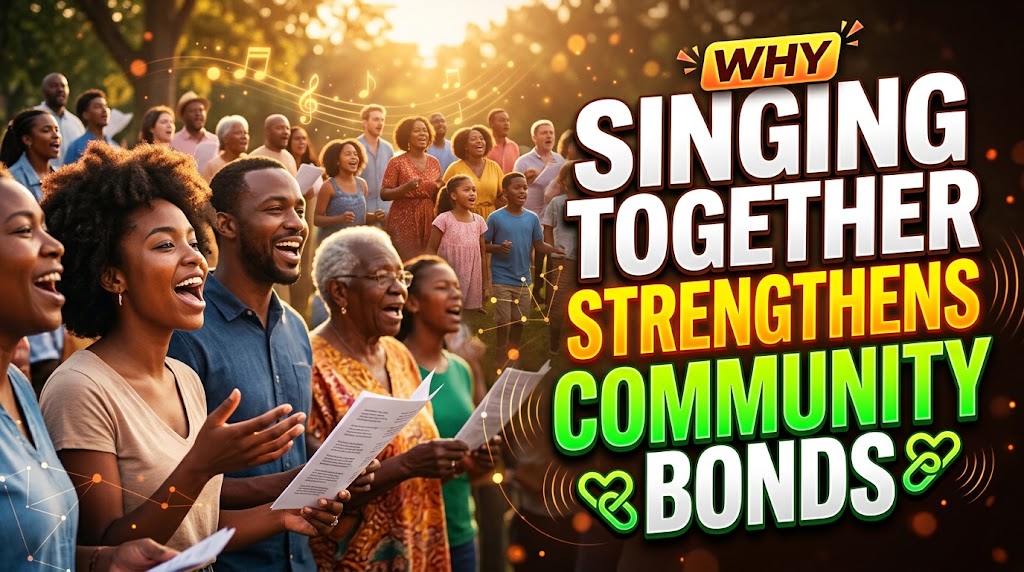
Why Singing Together Strengthens Community Bonds
Why Singing Together Strengthens Community Bonds
Why Singing Together Strengthens Community Bonds is a question that reveals something deeply human about music, fellowship and belonging. Across cultures and generations, people have gathered to sing during celebrations, worship services, ceremonies, festivals, funerals, community meetings and other important moments. Singing together is not simply the act of producing sound at the same time. It creates a shared experience in which people listen to one another, follow the same rhythm and contribute to something larger than themselves.
There is a unique power in joining your voice with the voices of other people. When individuals sing together, differences in age, background, occupation, personality and social status can temporarily become less important. Everyone becomes part of the same musical experience. Each voice contributes to the whole, and the final result depends on people participating together. This simple principle explains part of why singing together strengthens community bonds and continues to play such an important role in Christian worship and community life.
Singing has always been an important part of Christian gatherings. Churches around the world use songs to express faith, gratitude, hope, repentance, celebration and devotion. Congregational singing gives ordinary worshippers an opportunity to participate rather than simply observe. A person may not preach a sermon, play an instrument or lead a worship session, but they can still contribute by singing. That participation can create a powerful sense of belonging.
When an entire congregation sings the same song, something happens beyond the words and melody. People become connected through a shared activity. They breathe, listen, respond and create music together. The experience reminds individuals that they are not walking through life alone. They are part of a community that shares values, experiences and aspirations.
Why singing together strengthens community bonds can also be understood through the principle of shared identity. Communities become stronger when people develop a sense that they belong to something larger than themselves. A shared song can become one of the symbols of that identity. Certain songs become closely associated with particular churches, families, ministries, movements or generations. Hearing one of those songs years later can bring back memories of people, places and moments.
This is one reason Christian songs can become deeply meaningful to communities. A worship song may be sung repeatedly over many years. Children may learn it from their parents. Young people may sing it during church programmes. Older members may remember singing it during significant periods of their lives. Eventually, the song becomes more than music. It becomes part of the community’s shared memory.
Singing together also encourages people to listen to one another. Although singing may appear to be primarily about producing one’s own voice, group singing requires awareness of other voices. People must follow the rhythm, melody and timing of the group. They have to pay attention to the worship leader, choir or other singers. This creates an experience of coordination that can strengthen social connection.
The importance of this coordination should not be underestimated. Communities require people to cooperate. Families, churches, workplaces, schools and neighbourhoods all depend on individuals being able to participate in shared activities. Singing provides a simple and accessible way to practise this kind of cooperation. Nobody has to be a professional musician to experience the benefits of contributing to a collective performance.
Another reason why singing together strengthens community bonds is that it creates emotional connection. Music can communicate feelings that ordinary conversation sometimes struggles to express. A group singing about hope can create an atmosphere of encouragement. A song about gratitude can help people reflect on what they appreciate. A song about faith can remind listeners of beliefs that unite them.
In Christian communities, this emotional connection can become particularly significant. Worship songs often speak about God’s faithfulness, love, mercy, grace, salvation and promises. When hundreds or even thousands of people sing these messages together, the words become a collective expression of faith. Individuals hear their own voices alongside the voices of others who are expressing the same message.
Singing can also help people feel included. Someone who enters a new church or community may initially feel like an outsider. They may not know many people or understand all the traditions. Participating in a familiar song can provide an immediate opportunity to join the group. Even when introductions and conversations are difficult, singing can create a natural point of participation.
This is especially important for communities that want to welcome newcomers. A song does not necessarily require a long explanation before someone can participate. People can listen to the melody, follow the lyrics and gradually become involved. That simple process can reduce social distance and create an early sense of connection.
Why singing together strengthens community bonds is also connected to the way songs preserve stories. Many Christian songs carry messages about biblical events, personal experiences and historical moments. Through repeated singing, those stories can be passed from one generation to another. Music therefore becomes a vehicle for cultural and spiritual memory.
Consider how children learn songs in church. They may not immediately understand every theological concept contained in the lyrics, but repeated singing can help them remember important ideas. Years later, the same individuals may still remember the words and melodies they learned as children. In this way, singing can help communities transmit their values and traditions across generations.
Intergenerational singing is particularly powerful because it gives different age groups something to share. Older members may know traditional hymns and gospel songs. Younger members may introduce contemporary worship songs. When communities create opportunities for different generations to sing together, music can become a bridge rather than a dividing line.
This does not mean every generation will have identical musical preferences. Musical tastes naturally change. However, shared singing creates opportunities for people to appreciate what they have in common. A church can honour its musical heritage while also making room for new expressions of Christian worship.
Singing together can also strengthen relationships because it creates shared memories. People often remember songs connected with important events. A particular worship song may remind someone of a church anniversary, youth programme, wedding, graduation, Christmas service or season of personal difficulty. When groups experience these moments together, the songs become part of their collective history.
Community bonds grow through shared experiences. People become closer when they laugh together, work together, celebrate together and sometimes endure difficult seasons together. Singing can become another shared experience that contributes to this sense of togetherness.
There is also something powerful about the vulnerability involved in singing. Most people are not professional singers. When individuals sing in a group, they do not necessarily need to worry about having a perfect voice. The surrounding voices create a supportive environment in which participation matters more than individual performance.
This can be particularly meaningful in Christian worship. Congregational singing is not a concert where the audience simply watches a professional performer. Everyone can participate. The focus can move from individual ability to collective expression. This can help create a stronger sense of community because people are contributing rather than merely consuming.
Why singing together strengthens community bonds becomes even clearer when we consider loneliness. Modern life can leave many people feeling disconnected despite having access to digital communication. Social media can connect people across continents while still leaving individuals without meaningful face to face relationships. Singing together provides a physical and social experience that digital interaction cannot completely replace.
When people gather in the same space and sing together, they share an experience in real time. They hear the voices around them. They see other people participating. They respond to the same musical cues. These elements can create a feeling of presence and belonging.
This is one reason community singing can be valuable beyond church services. Choirs, gospel music groups, Christian music events and community concerts can bring people together around a shared interest. Participants may come from different backgrounds, but their common musical activity gives them something to build relationships around.
Christian music can therefore serve as more than entertainment. It can become a tool for fellowship. A gospel music event can create opportunities for people to meet, worship, share testimonies and encourage one another. A choir rehearsal can develop friendships through regular cooperation. A worship team can develop strong relationships through the shared responsibility of preparing music for a congregation.
The process of rehearsing together is particularly important. Singing together successfully requires practice. People must learn their parts, arrive prepared, listen to others and adjust when necessary. These activities can teach patience, responsibility and teamwork.
A choir member may discover that their individual part does not sound impressive on its own, but becomes meaningful when combined with other voices. This is an important lesson for community life. A strong community does not require everyone to perform the same role. Different contributions can combine to create something greater.
This principle also applies to Christian worship. A congregation includes people with different gifts. Some teach. Some lead. Some serve behind the scenes. Some sing. Some organise events. Some care for vulnerable members. Some encourage others. Singing provides a visible reminder that different contributions can work together toward a shared purpose.
Another important factor is repetition. Communities become stronger through regular interaction, and singing often occurs repeatedly. A congregation that sings together every week has a recurring activity that reinforces familiarity. People hear the same voices, recognise familiar songs and participate in shared rituals.
Over time, these repeated experiences can contribute to a stronger sense of community identity. Members begin to associate particular songs with their collective journey. Music becomes woven into the rhythm of community life.
Singing together can also create moments of unity during difficult circumstances. Throughout history, communities have used songs during periods of hardship, uncertainty and loss. Singing does not automatically solve problems, but it can provide a shared way of expressing hope, grief or determination.
In Christian communities, this can be especially meaningful because many worship songs acknowledge both difficulty and hope. People can sing about God’s presence even when circumstances are challenging. The collective act of singing can remind individuals that others are facing life’s difficulties alongside them.
This does not mean that every person experiences music in the same way. Individual responses to singing vary according to personality, culture, musical background and personal circumstances. Nevertheless, the social nature of group singing gives it a unique ability to create shared experiences.
The language of a song can also help communities overcome certain barriers. When people sing the same words, they temporarily share a common vocabulary. This can be particularly significant in multicultural Christian communities where people may speak different languages or come from different cultural traditions.
Gospel music demonstrates this beautifully. Christian music can cross geographical and cultural boundaries while retaining its central themes of faith, hope, worship and testimony. African gospel music, contemporary worship, traditional hymns and other Christian musical traditions can all provide opportunities for believers to express a shared faith through different musical styles.
Why singing together strengthens community bonds is ultimately connected to participation, identity, memory, emotion and belonging. Singing brings people into a shared activity where individual voices become part of a collective sound. It encourages cooperation, creates emotional experiences, preserves stories and gives communities moments they can remember together.
For churches seeking to strengthen fellowship, congregational singing should therefore not be treated merely as something that happens between announcements and preaching. It can be an important part of building relationships. The choice of songs, the involvement of different generations and the opportunity for the congregation to participate can all contribute to a stronger sense of belonging.
Worship leaders can encourage this by selecting songs that people can genuinely participate in rather than making every musical moment a demonstration of performance. Churches can also create opportunities for choirs, children, young people and older members to participate in different ways. When people see that their voices matter, they are more likely to feel connected to the wider community.
Families can also benefit from singing together. Parents and children who sing Christian songs at home create shared experiences that can become meaningful memories. Family worship does not need to involve elaborate musical arrangements. Even simple songs can create opportunities for conversation, reflection and togetherness.
Christian communities can also use music to welcome people who may struggle to participate in other activities. Someone who is shy in conversation may feel comfortable joining a song. Someone who is new to the community may find an opportunity to participate. Someone going through a difficult period may find comfort in hearing others sing words of hope.
The greatest strength of community singing is perhaps its simplicity. People do not need expensive equipment, professional recording studios or advanced musical training to experience the basic power of singing together. A group of people can gather, open their mouths and create something collectively.
In an increasingly individualistic world, that collective experience matters. Singing reminds us that our voices can contribute to something bigger than ourselves. It teaches us to listen, cooperate and make room for others. It shows us that harmony does not require every voice to sound identical.
This lesson extends far beyond music. Healthy communities are built when people with different personalities, abilities and experiences learn to work together. Each person brings something different, but the community becomes stronger when those differences contribute to a shared purpose.
Why singing together strengthens community bonds is therefore not simply a question about music. It is a question about human connection. Singing creates opportunities for people to participate, remember, communicate, celebrate, mourn, worship and encourage one another. It transforms individual voices into a collective expression and gives people a tangible experience of belonging.
For Christian communities, the significance can be even deeper. Singing allows believers to express their faith together, remind one another of biblical truths and create memories that can last for years. A song sung by a congregation can become part of its identity, history and testimony.
The next time you hear a church congregation singing together, do not think of it merely as background music for a service. Listen to what is happening socially. Individuals are joining their voices. Different generations may be participating. People who arrived as strangers may be singing beside one another. Personal experiences are being brought into a shared moment.
That is the quiet power of collective singing.
Singing together does not erase every difference between people, and it cannot solve every challenge a community faces. However, it can create one of the most accessible pathways toward connection. It gives people something to do together, something to remember together and, in Christian settings, something to believe and proclaim together.
Ultimately, why singing together strengthens community bonds comes down to a simple truth: people become connected through shared experiences. When those experiences involve music, participation, emotion and a common message, the bonds created can become remarkably meaningful.
A community that sings together is not necessarily a perfect community, but it is a community that has discovered one more way to listen to one another, participate with one another and create something together. In Christian life, that shared voice can become an expression of fellowship, faith and hope that reaches far beyond the final note.

Leave a Reply