
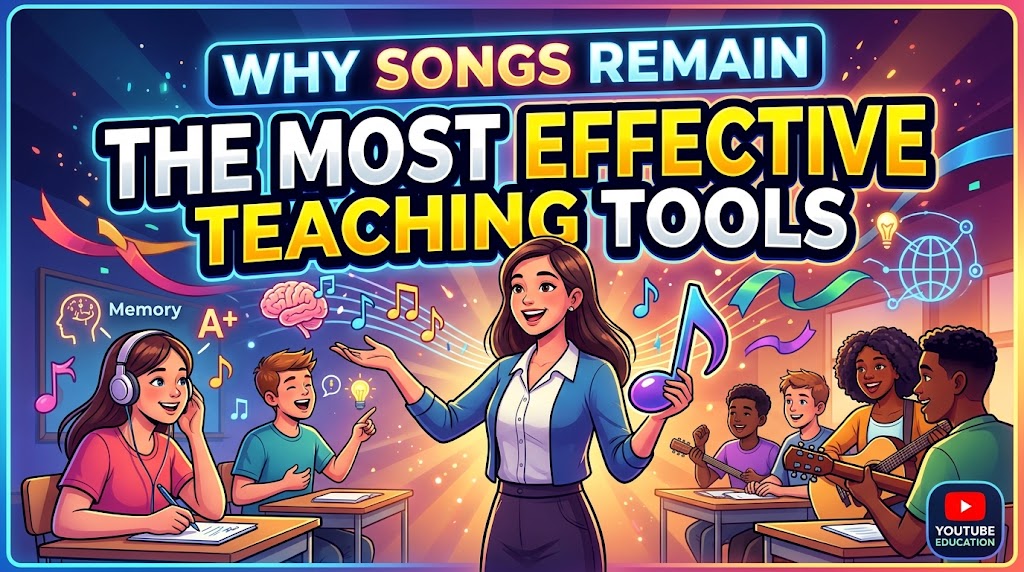
Why Songs Remain One of the Most Effective Teaching Tools
Why Songs Remain One of the Most Effective Teaching Tools
There was a time when I wondered why certain lessons from my school days had stayed with me for years while many others had quietly disappeared from memory. I could barely remember entire pages from textbooks I studied repeatedly, yet I could still recite songs I had learned decades earlier without hesitation. I could remember jingles from advertisements, childhood rhymes, church choruses and worship songs long after I had forgotten many facts and figures that once seemed important. That observation led me to think deeply about why songs remain one of the most effective teaching tools.
The more I reflected on it, the more obvious it became that music has always occupied a unique place in human learning. Long before modern classrooms, computers and smartphones existed, people used songs to preserve history, pass down traditions and teach values. Entire cultures relied on music to communicate important information from one generation to another. Songs carried stories, wisdom, instructions and beliefs. Even today, despite all our technological advancements, songs continue to play a powerful role in helping people learn, remember and apply information.
When I was younger, learning through songs felt almost effortless. Teachers would introduce educational songs to help students memorise the alphabet, multiplication tables or important facts. At the time, it seemed like a simple classroom activity. Looking back, I realise it was far more effective than many traditional teaching methods. Years later, those songs remained in my memory. The information had become attached to rhythm and melody, making it easier for my mind to retrieve whenever needed.
This experience is not unique to me. Almost everyone has encountered a song they have not heard in years, only to find themselves remembering every word the moment it starts playing. It is remarkable how the human brain responds to music. A melody can unlock memories that have been buried for years. A simple chorus can bring back experiences, emotions and lessons that seemed forgotten. This powerful connection between music and memory helps explain why songs remain one of the most effective teaching tools.
One reason songs work so well is that they engage multiple parts of the brain at the same time. Reading information often requires concentration from a limited set of cognitive functions, but music introduces rhythm, repetition, emotion and auditory stimulation. When these elements work together, learning becomes more engaging and memorable. Instead of merely processing words, the brain experiences them through a richer and more meaningful format.
I have noticed that when information is presented in a song, people rarely feel like they are studying. They feel like they are enjoying themselves. This is one of the hidden strengths of music as a teaching tool. Learning often becomes difficult when people perceive it as a chore. Songs remove much of that resistance. They transform learning into an enjoyable experience. As a result, learners become more receptive to the information being shared.
Another reason why songs remain one of the most effective teaching tools is repetition. Successful songs often repeat important phrases, choruses and ideas multiple times. This repetition reinforces learning without making it feel repetitive. In a traditional lesson, repeating the same information over and over might become boring. In a song, repetition feels natural and enjoyable. People sing along willingly, unknowingly strengthening their understanding and recall of the material.
I have seen this principle at work in churches. Many people can quote scripture because they learned it through songs. Worship songs often contain biblical truths that become deeply rooted in the hearts and minds of listeners. A person may struggle to memorise a passage by reading it repeatedly, yet they can effortlessly remember the same passage when it is set to music. The melody acts as a bridge between the words and memory.
Emotion also plays a significant role in learning. Information connected to strong emotions tends to remain in memory longer. Songs naturally evoke emotions. They can inspire joy, hope, gratitude, reflection and even conviction. When a lesson is tied to an emotional experience, it becomes more meaningful and memorable. This emotional connection explains why many people remember songs from significant moments in their lives.
As someone who enjoys observing how people learn, I have noticed that music can cross barriers that traditional teaching methods sometimes struggle to overcome. Language differences, age gaps and educational backgrounds often become less significant when music is involved. A well-written song can communicate complex ideas in a simple and accessible way. It can reach children and adults alike. It can educate people regardless of their level of formal education.
Throughout history, songs have been used to teach moral values, social norms and cultural traditions. Parents sang lullabies to children. Communities passed down stories through folk songs. Religious groups used hymns to teach doctrine. Nations preserved history through musical traditions. In each case, songs served as educational tools that extended beyond entertainment.
One fascinating aspect of music is its ability to simplify complicated concepts. Sometimes a difficult idea becomes easier to understand when it is presented through lyrics and melody. The structure of a song forces information to be organised in a way that is clear and concise. This helps learners absorb key points without becoming overwhelmed by unnecessary complexity.
In today’s digital world, the teaching power of songs remains as relevant as ever. Educational content creators frequently use music to engage audiences online. Language learning programmes incorporate songs to improve vocabulary retention. Children’s educational channels rely heavily on music to teach numbers, letters and life skills. Even adults often use songs to remember information ranging from historical events to professional training materials.
I have personally found that music helps maintain focus. There are times when reading alone can feel mentally exhausting. However, when information is presented through music, attention tends to last longer. The changing melodies, rhythms and lyrical patterns create a dynamic learning experience that keeps the mind engaged. This is particularly important in an age where distractions compete constantly for our attention.
Another reason why songs remain one of the most effective teaching tools is their ability to encourage participation. People do not simply listen to songs. They sing them. They hum them. They repeat them. They share them. This active involvement reinforces learning. Participation transforms listeners from passive recipients of information into active learners.
Music also has a unique ability to build community. Group singing creates shared experiences that strengthen social connections. In classrooms, churches and community gatherings, songs often unite people around common messages and values. Learning becomes a collective activity rather than an isolated task. This sense of connection can increase motivation and improve learning outcomes.
I have often been amazed by how quickly children learn songs compared to other forms of information. A child may struggle to remember a spoken instruction yet effortlessly memorise an entire song after hearing it only a few times. This natural responsiveness to music demonstrates its effectiveness as a teaching tool. Children learn through repetition, rhythm and enjoyment, all of which are abundant in songs.
The effectiveness of songs is not limited to childhood education. Adults benefit as well. Professional organisations use songs and musical techniques for training. Marketing campaigns use memorable jingles to promote products. Public health campaigns use songs to communicate important safety messages. The reason is simple. Music works. It captures attention and improves retention.
Technology has amplified the reach of music-based learning. A song created in one part of the world can now reach millions of people across different countries within hours. Educational songs can be streamed, downloaded and shared instantly. This accessibility has expanded the potential impact of music as a teaching tool.
One aspect that is sometimes overlooked is the confidence music can build in learners. Many people feel intimidated by traditional educational settings. Songs create a more relaxed environment where mistakes feel less threatening. Learners become more willing to participate and engage with the material. This increased confidence often leads to better learning outcomes.
The relationship between music and memory has been studied extensively, but even without scientific research, everyday experience reveals its effectiveness. Most people can recall song lyrics with surprising accuracy. The combination of melody, rhythm and repetition creates powerful memory cues that support long-term retention.
As I think about my own experiences, I realise that some of the most important lessons I have learned came through songs. Messages about faith, perseverance, gratitude, kindness and hope often reached me through music before they reached me through books or lectures. Songs have a way of making lessons feel personal. They speak not only to the mind but also to the heart.
This emotional and intellectual combination is what makes music such a powerful educational tool. Effective learning is not simply about acquiring information. It is about understanding, remembering and applying knowledge. Songs support all three of these goals. They help people understand concepts, remember information and connect lessons to real-life experiences.
The enduring popularity of music-based learning suggests that its effectiveness is unlikely to diminish. New technologies may change how we access information, but the human response to music remains remarkably consistent. People continue to learn through songs because music aligns naturally with the way our brains process and retain information.
When I reflect on the countless songs that have shaped my understanding of the world, I become even more convinced that music is one of humanity’s greatest educational resources. It has the power to teach without feeling like teaching. It can inspire while it informs. It can entertain while it educates. Few teaching methods possess this combination of effectiveness and accessibility.
Ultimately, why songs remain one of the most effective teaching tools comes down to their unique ability to connect information with memory, emotion, participation and enjoyment. They transform learning from a passive activity into an engaging experience. They make lessons easier to remember and more meaningful to apply. Whether in classrooms, homes, churches or digital platforms, songs continue to prove their value as powerful instruments of education. As long as people respond to rhythm, melody and storytelling, songs will remain one of the most effective teaching tools available, helping generations learn, grow and remember the lessons that matter most.

Leave a Reply