
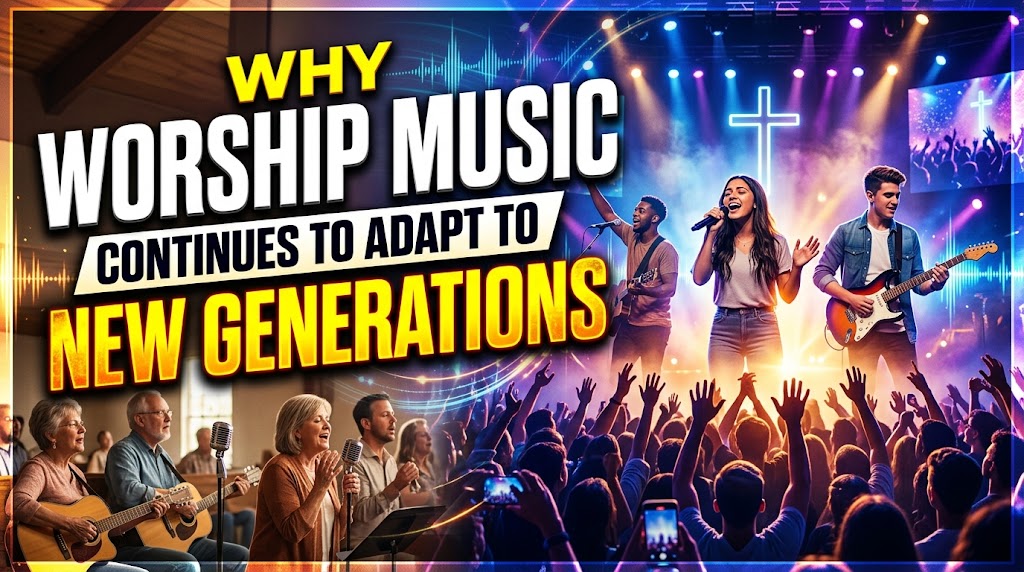
Why Worship Music Continues to Adapt to New Generations
Why Worship Music Continues to Adapt to New Generations
Why Worship Music Continues to Adapt to New Generations is a question that reveals something important about the relationship between faith, culture, creativity, and human expression. Worship music has been part of Christian gatherings for centuries, yet the way believers write, record, perform, share, and experience worship songs continues to change. While the central purpose of worship remains connected to honouring God, the musical styles, instruments, production techniques, lyrical approaches, and platforms used to communicate that worship can look very different from one generation to another.
This ongoing transformation does not necessarily mean that worship music is abandoning its foundation. Instead, Why Worship Music Continues to Adapt to New Generations can be understood by recognising that every generation grows up surrounded by different sounds, technologies, cultural experiences, languages, and methods of communication. The music that helps one generation express its faith may not sound the same as the music that connects with another generation. As society changes, Christian musicians and worship leaders continue to explore ways of communicating timeless spiritual truths through musical forms that people understand and appreciate.
One of the biggest reasons Why Worship Music Continues to Adapt to New Generations is the natural development of musical culture. Music itself is never completely static. New genres emerge, older styles are rediscovered, instruments become more sophisticated, and listeners develop new preferences. Christian music exists within this wider musical environment. As people become familiar with new sounds, worship musicians often incorporate appropriate elements of contemporary music into their compositions while retaining Christian themes and messages.
For example, generations that grew up with traditional hymns may have developed a strong appreciation for structured verses, memorable melodies, and formal arrangements. Later generations became more familiar with contemporary worship, gospel, rock, pop, soul, hip hop, Afrobeat, and other musical influences. Today, Christian artists can combine multiple musical traditions to create sounds that speak to audiences across different backgrounds. This demonstrates that worship music can change in presentation without necessarily changing its fundamental purpose.
Another important factor is technology. Technology has completely transformed how worship music is created and consumed. Previous generations depended heavily on church services, radio broadcasts, physical albums, cassette tapes, CDs, and live gatherings to discover Christian music. Today, listeners can find worship songs through streaming platforms, social media, music websites, podcasts, video platforms, and digital communities.
This technological shift has created new opportunities for Christian musicians. An independent worship artist can record a song, publish it online, and potentially reach listeners in different countries without depending entirely on traditional music distribution systems. A worship song created in Africa can be heard by Christians in Europe, North America, Asia, or Australia within a very short period. Likewise, music created in another part of the world can influence worship sounds in local churches.
My Experience With Modern Worship and Music Technology
As an independent gospel music artist, I have personally experienced how much technology has changed the way music can be created, released, and discovered. My own music can be recorded in Nigeria and made available to listeners through digital platforms without requiring a traditional physical distribution system.
For me, this has shown that adapting to new generations does not necessarily mean abandoning the values behind worship music. The tools may change, the sounds may develop, and the way listeners discover songs may be different, but the message of faith can remain at the centre.
Many of the songs I write come from gratitude for God’s grace and mercy during personal experiences and different seasons of my life. When I record and release those songs using modern technology, I am using contemporary tools to communicate a message rooted in timeless faith.
I also recognise that younger listeners may connect with music differently from previous generations. They may discover a song through a streaming platform, a social-media post, a video, or a recommendation from another listener rather than through a church service or physical album. I believe Christian artists can understand these changes without losing sight of the purpose behind the music.
For me, the goal is not simply to make worship music sound modern. It is to use the opportunities available today to communicate genuine faith and gratitude in a way that people can understand and connect with.
The internet has therefore become an important part of Why Worship Music Continues to Adapt to New Generations. Younger listeners in particular have grown up in an environment where digital discovery is normal. They may discover a worship song through a short video, a recommendation, a playlist, a church livestream, or a social media post rather than through traditional radio or a physical album. Christian musicians who understand these changing listening habits can find new ways to introduce their music to audiences.
Another reason worship music continues to adapt is language. Christianity is a global faith, and worship does not belong to one country, culture, or language. Christians around the world express their faith through their own languages and musical traditions. As Christian music becomes increasingly accessible globally, different cultures influence one another.
African gospel music provides an excellent example of how cultural identity can shape worship music. African worship and gospel artists have introduced rhythms, vocal arrangements, instrumentation, dance elements, harmonies, and languages that have found audiences beyond their original communities. Contemporary African Christian music can combine local musical traditions with modern production, creating sounds that feel culturally familiar while remaining accessible to international listeners.
This global exchange is another important explanation for Why Worship Music Continues to Adapt to New Generations. Younger Christians are exposed to music from many countries. A listener in Lagos can discover a worship artist from Ghana, South Africa, the United States, the United Kingdom, or another part of the world within minutes. This exposure naturally influences musical expectations and creativity.
Generational experiences also influence worship music. Every generation experiences its own social environment, economic realities, cultural changes, technological developments, and personal challenges. These experiences can influence the subjects that appear in Christian songs. While themes such as faith, hope, grace, salvation, gratitude, prayer, trust, and devotion remain relevant, artists may communicate those themes through language that reflects the experiences of their generation.
A young Christian dealing with the pressures of modern life may connect strongly with a worship song that speaks directly about anxiety, uncertainty, identity, purpose, loneliness, perseverance, or trusting God during difficult circumstances. Older generations may connect with different musical arrangements or lyrical expressions based on their own experiences. The underlying message can remain Christian while the method of communication changes.
This helps explain why worship music does not have to remain identical across generations. A song can communicate an enduring biblical truth while using modern musical language. The important question is not simply whether a song sounds traditional or contemporary. It is also whether the music communicates its intended message effectively to the people listening to it.
Another factor behind Why Worship Music Continues to Adapt to New Generations is the changing role of the worship leader. Worship leaders today often operate in a much broader environment than simply leading songs during a church service. They may write songs, produce recordings, create videos, interact with listeners online, collaborate with other musicians, organise worship events, and build communities around their music.
This expanded role has created greater opportunities for experimentation. Worship leaders can test different arrangements, collaborate across genres, release acoustic versions, produce live recordings, and introduce songs through digital platforms. Listeners can also respond immediately through comments, shares, streams, and other forms of engagement. This interaction can influence which songs gain attention and which musical approaches become more popular.
Churches themselves are also changing. Many congregations now contain multiple generations worshipping together. This creates an interesting challenge for worship teams because they must consider different musical preferences within the same congregation. A church may include people who love traditional hymns, believers who prefer contemporary worship, young adults who appreciate gospel and Afro-inspired sounds, and children who are becoming familiar with Christian music through digital media.
As a result, some churches deliberately create diverse worship experiences. They may combine hymns with contemporary arrangements, introduce new songs alongside familiar ones, or use different musical styles during different parts of a service. This does not necessarily mean that one generation has replaced another. Instead, it can demonstrate how Christian communities can create room for different musical expressions.
Why Worship Music Continues to Adapt to New Generations is also connected to songwriting. Modern Christian songwriters have access to an enormous amount of information and inspiration. They can study Scripture, listen to Christian music from previous decades, explore international music, collaborate remotely, experiment with digital production, and receive feedback from listeners around the world.
Songwriting has therefore become increasingly diverse. Some Christian artists create highly congregational songs designed for churches to sing together. Others create personal worship songs intended for individual listening. Some produce music that blends gospel with contemporary pop. Others explore acoustic worship, choir based arrangements, electronic production, or culturally specific sounds.
This diversity gives worship music room to reach people with different musical preferences. Not every Christian will connect with the same song, and that is perfectly normal. Music is deeply personal. What feels powerful to one listener may not have the same effect on another person. The existence of different worship styles allows believers to engage with music in ways that fit their experiences and cultural backgrounds.
The rise of social media has accelerated this process. Platforms built around short form video and rapid content discovery have changed how songs become popular. A powerful chorus, a meaningful lyric, a live worship moment, or a memorable performance can attract attention online and encourage listeners to search for the full song.
This means Christian musicians increasingly have opportunities to introduce worship music outside traditional church environments. People who may never have attended a particular church can encounter its worship music online. Someone searching for encouragement may discover a Christian song while browsing social media. Another listener may find a worship artist through a recommendation from a friend.
This digital environment has also encouraged Christian artists to become more intentional about storytelling. Audiences increasingly want to know the story behind a song. They want to understand what inspired the lyrics, what experience influenced the recording, and what message the artist hopes listeners will receive. These stories can create deeper connections between musicians and their audiences.
However, adaptation does not mean that everything new is automatically better. The fact that worship music changes does not mean every trend should be accepted without thought. Christian musicians and worship leaders still have important questions to consider regarding lyrical substance, theological accuracy, authenticity, artistic integrity, and the purpose of the music.
The challenge is finding a meaningful balance between relevance and substance. Worship music can use modern production techniques without becoming empty. It can use contemporary rhythms without losing its Christian identity. It can appeal to younger listeners while still respecting older generations. It can experiment creatively while remaining focused on its spiritual purpose.
This balance is particularly important because worship music can influence how people understand and remember Christian teachings. Songs are often easier to remember than long explanations because melody and repetition can help information stay in the mind. For this reason, Christian songwriters have an opportunity to communicate meaningful biblical ideas through memorable music.
Another reason Why Worship Music Continues to Adapt to New Generations is the desire for authenticity. Modern audiences often respond strongly to music that feels genuine. Listeners want songs that reflect real experiences rather than polished messages that feel disconnected from everyday life. Christian artists who openly address personal struggles, questions, growth, gratitude, failure, hope, and faith can create music that resonates deeply with listeners.
Authenticity does not require abandoning biblical principles. Instead, it can mean communicating faith honestly. A worship song can acknowledge difficulty while expressing trust. It can recognise uncertainty while pointing towards hope. It can describe a painful season while celebrating God’s faithfulness. These honest expressions allow listeners to see that Christian faith can exist alongside real human experiences.
Generational adaptation also allows worship music to remain accessible to younger audiences. If young people only encounter Christian music through musical styles that feel completely unfamiliar to them, they may struggle to connect with it. This does not mean churches should abandon traditional music. Rather, it highlights the value of introducing younger generations to both the musical heritage of Christianity and contemporary expressions of worship.
There is significant value in preserving older worship songs and hymns. They carry historical memories, theological themes, cultural significance, and musical traditions. At the same time, new generations need opportunities to create their own songs. A living musical tradition should have both roots and new growth.
This is why the future of worship music will probably continue to involve both preservation and innovation. Older songs will continue to be rediscovered, rearranged, and introduced to new listeners. New artists will continue experimenting with contemporary sounds. Different cultures will continue influencing one another. Digital technology will continue changing music production and distribution.
Ultimately, Why Worship Music Continues to Adapt to New Generations comes down to the fact that people change, cultures change, technology changes, and musical language changes. The desire to worship, however, remains deeply important to Christian communities around the world. Worship music adapts because musicians are continually looking for meaningful ways to express faith within the world they inhabit.
What Adapting to New Generations Means to Me
As an independent gospel music artist, I have come to appreciate that every generation experiences music differently. The sounds that speak to one generation may not be the same sounds that connect with another, and I believe there is room for that diversity within Christian music.
My own music is created from gratitude for God’s grace and mercy and from personal experiences that have shaped my faith. At the same time, I use modern recording, distribution, and digital platforms to share those songs with listeners. For me, this is an example of how the methods can change while the message remains rooted in faith.
I don’t believe adapting to a new generation means abandoning everything that came before. Older hymns, gospel traditions, biblical truths, and the testimonies of previous generations can continue to influence new music. At the same time, younger artists can bring their own experiences, sounds, languages, rhythms, and creative ideas into the expression of their faith.
That balance is important to me. I want Godsfame Music to remain open to creative development while keeping worship, faith, gratitude, and the message of God’s goodness at the centre of what I create.
Technology has also made it possible for independent artists to reach people in ways that were much more difficult in previous generations. A song created in one place can now be discovered by listeners in another country within a short time. This creates opportunities for gospel music to cross generations and cultures without losing the personal story behind it.
I also believe that not every new sound needs to become a permanent trend. Some musical styles may be popular for a season, while others may continue for decades. What matters to me is whether the music communicates something genuine and meaningful.
As I continue my journey with Godsfame Music, I want to learn from the past, make responsible use of the tools available today, and create music that can speak to the people of my generation and beyond.
The sound of worship may change from generation to generation, but the heart behind genuine worship can remain the same.
One more correction

Leave a Reply