
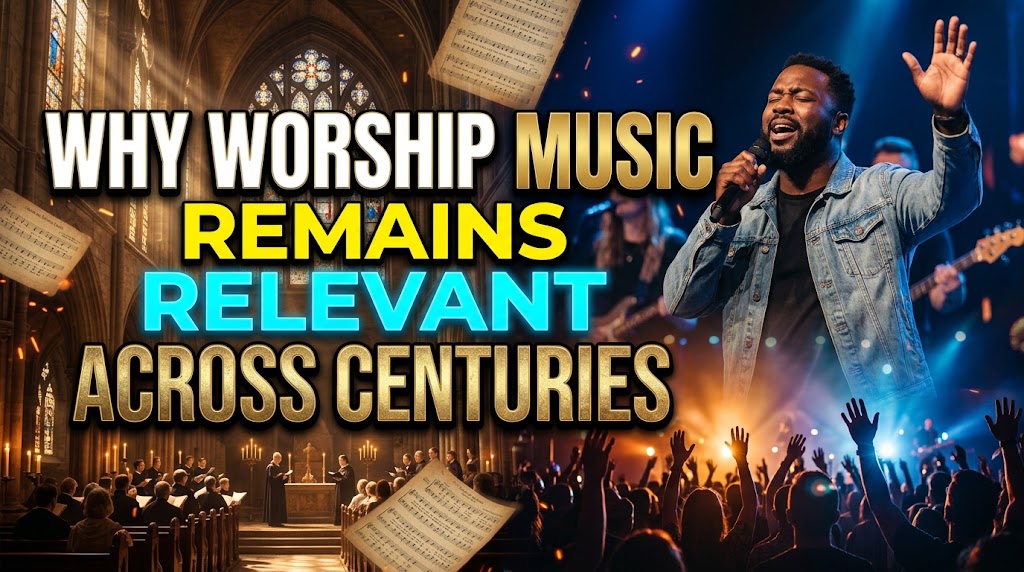
Why Worship Music Remains Relevant Across Centuries
Why Worship Music Remains Relevant Across Centuries
Why Worship Music Remains Relevant Across Centuries is a question that becomes even more interesting when we consider how dramatically the world has changed. Civilisations have risen and fallen, languages have evolved, musical instruments have changed, technology has transformed the way people communicate, and generations have developed different cultural tastes. Yet worship music continues to occupy an important place in the lives of millions of Christians around the world.
From ancient songs recorded in Scripture to traditional hymns, gospel choirs, contemporary worship bands and modern Christian music released through digital streaming platforms, worship music has continued to adapt without losing its central purpose. It has remained a powerful way for people to express faith, gratitude, surrender, hope, repentance and devotion to God.
The continued relevance of worship music is not simply because Christians enjoy singing. Music has a unique ability to combine words, emotion, memory and community in a way that ordinary conversation often cannot. A worship song can communicate a message of faith while simultaneously creating an emotional experience that stays with the listener long after the music has stopped.
This helps explain why worship music has survived countless cultural and technological changes. The instruments may change. The production techniques may change. The language may change. The musical styles may change. However, the human desire to express faith through music remains remarkably consistent.
The Bible itself provides extensive evidence of the importance of music in the worship of God. The Book of Psalms contains songs and poems expressing praise, thanksgiving, sorrow, repentance, trust and confidence in God. These ancient writings demonstrate that worship music has never been limited to moments of celebration. It has also been used to express the full range of human experiences.
What Worship Music Means to Me
As a gospel music artist, I have come to appreciate why worship music has remained relevant through so many generations. The musical styles around us may change, but the reasons people worship God remain deeply meaningful. Many of the songs I write are born from gratitude for God’s grace and mercy during personal experiences and different seasons of my life.
When I look at the history of worship music, I am reminded that people have always needed ways to express gratitude, trust, hope, surrender, and faith. My own songwriting is part of that continuing expression. The instruments, recording technology, and ways of sharing music may be different from those of previous generations, but the heart behind the music can remain the same.
For me, creating gospel music is therefore not simply about following current musical trends. I want the songs I write through Godsfame Music to carry messages that remain meaningful beyond a particular moment or musical style. I want them to express genuine gratitude and point people toward God.
A song may sound modern today, but its message can still carry something timeless. That is one of the things that gives worship music its lasting place in the lives of believers.
Worship Music Speaks to Every Generation
This is one reason worship music remains relevant across centuries. It is not merely a question of musical trends. It is also a question of human experience.
People experience joy and sadness, victory and disappointment, uncertainty and hope in every generation. Although circumstances change, these fundamental experiences remain.
A person living thousands of years ago could experience fear, grief, gratitude, or hope just as a person living today can. Worship music provides a language through which these emotions can connect with faith.
That connection gives worship songs an enduring quality.
Songs Preserve Faith and Memories
Another important reason worship music remains relevant is its ability to preserve and communicate messages across generations.
A song can carry an idea from one generation to another in a memorable form. People may forget the exact words of a conversation, but a melody and its lyrics can remain in their memory for decades.
Many Christians can remember songs they learned as children. They may have heard those songs at home, in church, at school, or during family gatherings. Years later, the same songs can bring back memories of people, places, and experiences.
In this way, worship music becomes more than sound. It becomes part of personal and collective memory.
Traditional Hymns Still Have a Place
Traditional hymns demonstrate this particularly well. Many hymns written generations ago are still sung today because their themes remain meaningful.
They speak about faith, grace, salvation, hope, forgiveness, God’s character, and the challenges of Christian life.
Although their musical arrangements may sound different from modern worship recordings, their central messages continue to connect with listeners.
Worship Music Continues to Adapt
At the same time, worship music has never remained completely unchanged. Its continued relevance is partly explained by its ability to adapt.
Christian musicians have consistently incorporated new instruments, musical structures, languages, and production technologies.
Modern worship music can sound very different from a traditional church hymn, yet both can serve similar purposes. A contemporary worship song may use keyboards, electric guitars, electronic production, and modern vocal arrangements, while an older hymn may depend on a piano, organ, or choir.
The musical language may be different, but the underlying desire to praise God and communicate faith can remain the same.
Technology Has Expanded the Reach of Worship Music
Technology has dramatically expanded the reach of worship music.
In previous centuries, a worship song might have travelled slowly from one congregation or community to another. Today, a newly released Christian song can potentially reach listeners around the world within hours.
A worship artist in Africa can be heard by listeners in Europe, North America, Asia, and Australia. A church worship session can be recorded and shared online. A Christian songwriter can publish music independently without necessarily relying on a traditional record company.
My own experience as an independent gospel artist has shown me how different today’s music environment is. Through digital distribution, a song can move beyond the local community where it was created and become available to listeners in many parts of the world.
African Gospel Music Has a Global Voice
The growth of African gospel music provides a powerful example of this global exchange.
Christian music from Nigeria, Ghana, South Africa, and other African countries has increasingly attracted international audiences. Distinctive rhythms, vocal styles, languages, and musical traditions have introduced new sounds into the global Christian music landscape.
This demonstrates that worship music can remain rooted in local culture while still connecting with a global audience.
Relevance does not require every Christian song to sound the same. In fact, musical diversity can demonstrate how people from different backgrounds express the same faith in different ways.
Worship Music Can Become Part of Personal Devotion
Another reason worship music remains relevant is its connection with prayer.
For many Christians, singing is an extension of personal devotion. A person may listen to worship music while praying, studying the Bible, travelling, exercising, working, or simply reflecting quietly.
Music can help create an atmosphere for reflection. A carefully written worship song can focus the mind on a particular biblical truth or spiritual theme.
The song about God’s faithfulness, for example, may become something a person recalls during a difficult period. A song about hope may provide encouragement when circumstances appear uncertain. A song about forgiveness may remind someone of the Christian message of grace.
Worship music can therefore function as a form of spiritual remembrance. It can bring important truths back to the mind at moments when people need them most.
Worship Music Creates Community
Community is another major factor behind the enduring relevance of worship music.
Singing together creates a shared experience that individual listening cannot completely reproduce. When hundreds or thousands of people sing together, they participate in something collective.
This communal dimension has existed throughout Christian history. Congregations have gathered to sing, pray, and worship together for generations.
There is something distinctive about hearing an entire congregation sing the same words. It can remind individuals that their faith is not simply a private experience. They belong to a larger community of people who share beliefs, values, and hopes.
Worship music can also help create unity among people who might otherwise have very little in common.
Worship Gives People Words for Difficult Emotions
Also note that worship songs remain relevant because it gives people a way to express emotions that can sometimes be difficult to explain through ordinary speech.
There are moments when someone may struggle to find the right words for gratitude, sorrow, fear, or hope. A song can provide those words.
This is especially significant during major moments of life. People often turn to music during celebrations, weddings, funerals, church services, personal milestones, and periods of difficulty.
Christian worship music can provide language for these experiences while placing them within a framework of faith.

Leave a Reply